When you purchase through links on our site, we may earn an affiliate commission. This helps support our work and allows us to continue delivering in-depth, unbiased gaming coverage.
Introduction
The market of high-fidelity gaming has evolved significantly, and navigating the upper echelons of GPU performance requires a keen eye for value and longevity. In this detailed NVIDIA GeForce RTX 4080 Super review, we revisit a graphics card that was introduced to recalibrate the high-end market. As we move through 2026, the 4080 Super stands as a mature, powerhouse solution for enthusiasts who refuse to compromise on visual fidelity but are hesitant to pay the premium required for halo-tier products. This review will dissect the architectural nuances of the fully enabled AD103 silicon, evaluate its standing against modern game engines, and determine if it remains the sweet spot for 4K gaming. We aim to provide a clear answer for competitive gamers, content creators, and simulation enthusiasts wondering if this GPU is the right engine for their rigs.
Key Takeaways
The RTX 4080 Super delivers exceptional 4K native performance, often exceeding 60 FPS in the most demanding titles without upscaling.
NVIDIA has equipped this model with the fastest GDDR6X video memory in the Ada Lovelace lineup, clocked at 23 Gbps. The price correction to a $999 MSRP makes it a far more attractive option than the original non-Super 4080 launch. DLSS 3.5 and Frame Generation technologies continue to be s, extending the card’s lifespan significantly. Thermal efficiency is outstanding, with the card running cooler and quieter than many competitors in its class.

Product Overview
The NVIDIA GeForce RTX 4080 Super is the culmination of the Ada Lovelace architecture’s high-end consumer offerings. Sitting comfortably between the RTX 4070 Ti Super and the halo RTX 4090, it belongs to the enthusiast-class category of graphics cards. Its target audience consists of gamers playing at 4K resolution, users driving high-refresh-rate 1440p ultrawide displays, and creative professionals requiring CUDA acceleration for rendering and AI workloads. What makes this unit unique is its implementation of the fully enabled AD103 GPU die, squeezing every drop of performance available from this specific silicon tier. Compared to the previous generation and the original 4080, the Super variant offers a slight bump in core count and a significant boost in memory speed, all while launching at a more aggressive price point to better compete with AMD’s flagship offerings.
Design & Build Quality
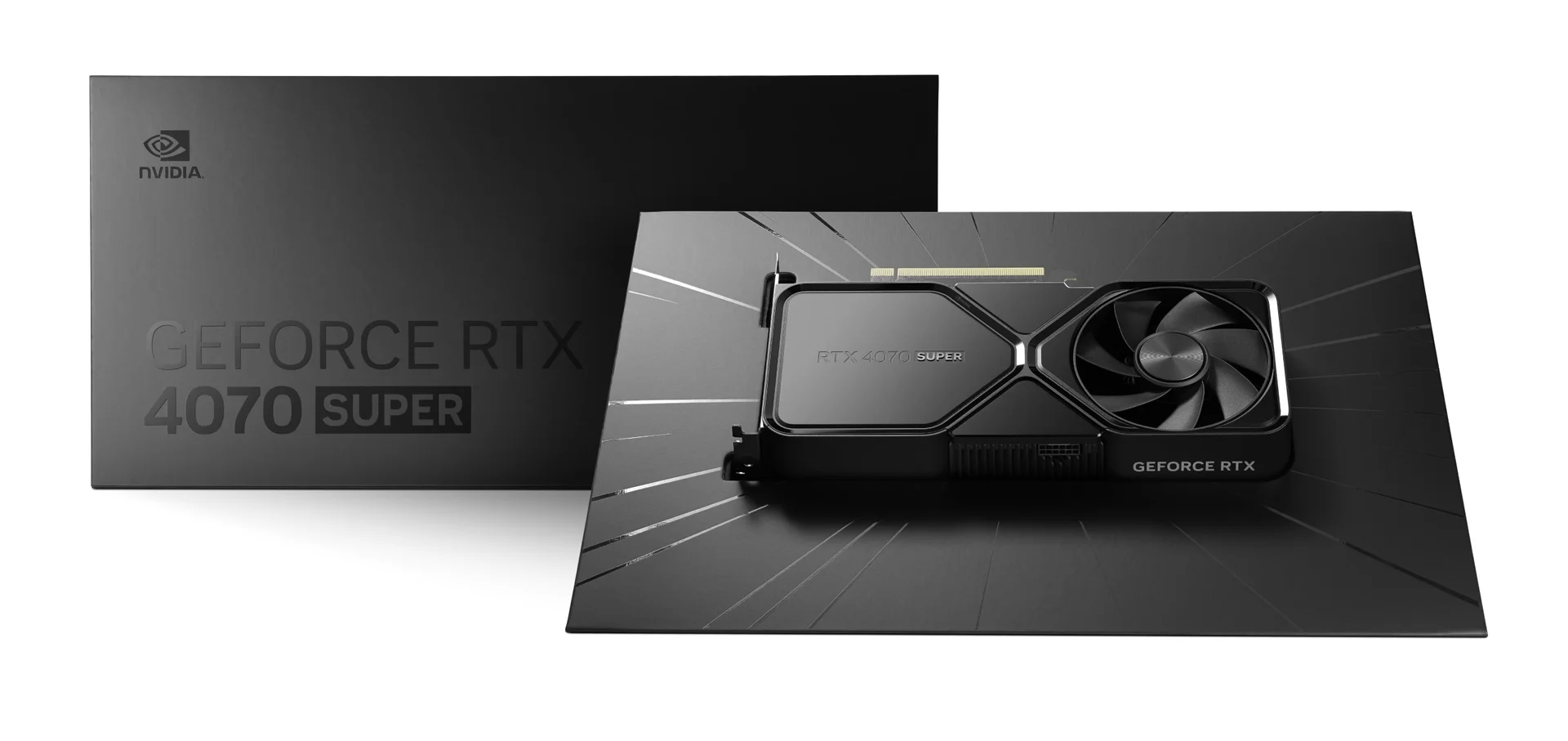
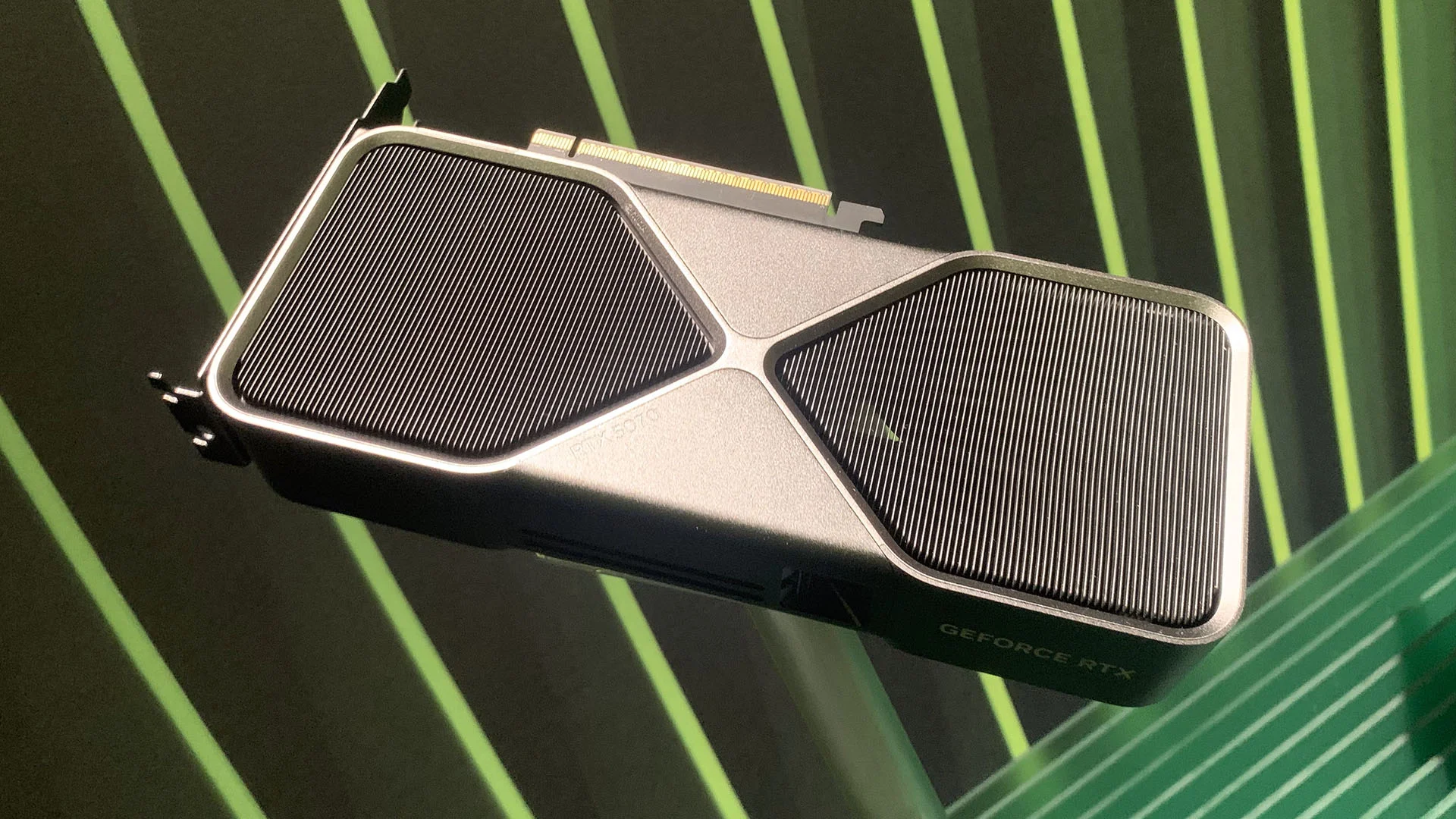
NVIDIA’s Founders Edition design for the RTX 4080 Super is a masterclass in industrial engineering. It retains the sleek, all-black metal aesthetic that distinguishes it from the gunmetal grey of the original 40-series cards. The build materials are premium, featuring a die-cast aluminum body that feels incredibly rigid and durable. However, this robustness comes with significant weight and size; the card occupies three distinct PCIe slots, and users will almost certainly need a support bracket to prevent sag over long periods. Ergonomically, the flow-through cooler design works exceptionally well, pulling cool air from the bottom and exhausting heat out the top and rear. The aesthetic is understated and professional, devoid of garish RGB lighting, save for the subtle white illuminated GeForce text, making it perfect for stealth builds.
Features & Technology
When analyzing the GeForce RTX 4080 SUPER specifications, the technology stack is impressive. It’s powered by 10,240 CUDA cores and 80 dedicated Ray Tracing cores (3rd Gen). A standout feature is the 16GB of GDDR6X VRAM, which now operates at 23 Gbps, providing a memory bandwidth of 736 GB/s. This bandwidth is crucial for feeding high-resolution textures at 4K. Connectivity includes one HDMI 2.1a port and three DisplayPort 1.4a outputs. While effective, the lack of DisplayPort 2.1 is a missed opportunity for future-proofing against next-gen monitors. On the software side, the card fully supports the NVIDIA Broadcast app for AI-enhanced voice and video, and dual NVENC encoders with AV1 support, which is a massive boon for streamers looking to broadcast high-quality video at lower bitrates.
Performance
In our comprehensive RTX 4080 Super performance comparison, the card demonstrates why it’s a top choice for 4K gaming. In rasterization-heavy titles like Call of Duty or Assassin’s Creed, the card maintains high frame rates with impeccable stability. The latency is minimized via NVIDIA Reflex, making it highly responsive for competitive shooters. Where the card is in ray-traced environments. In games like Cyberpunk 2077 or Alan Wake 2, enabling Path Tracing usually cripples hardware, but the 4080 Super, aided by DLSS 3.5, delivers a playable and visually stunning experience. The thermal performance is equally impressive; under full load, the Founders Edition rarely breaches 65 degrees Celsius, ensuring that heat doesn’t throttle performance during marathon gaming sessions.

Comfort & Usability
For a graphics card, comfort translates to acoustic performance and ease of integration. The RTX 4080 Super is remarkably quiet. The fans use a counter-rotating design that minimizes turbulence and noise, often spinning down to zero RPM when the system is idle or under light load. The setup process, however, requires attention to the power delivery. The card uses the 12VHPWR connector, which demands a compatible ATX 3.0 power supply or the use of the included adapter dongle. Users must ensure the cable is fully seated to avoid safety issues. Once installed, the card is virtually maintenance-free, though its size means you must verify case clearance before purchasing.
Software & Customization
The software ecosystem surrounding the RTX 4080 Super is the industry standard for stability and feature depth. The unified NVIDIA App allows for smooth driver updates and optimal game setting configurations. For enthusiasts, the control panel offers granular adjustments for anisotropic filtering, low latency modes, and maximum frame rate caps. The software also enables RTX Video Super Resolution, which uses AI to upscale browser-based video content, improving the quality of YouTube or Netflix streams on high-resolution monitors. Customization of the limited lighting on the Founders Edition is minimal, but third-party partner cards from brands like ASUS or MSI offer extensive RGB control that can sync with motherboard software.
Technical Specifications Dimensions: 304 mm x 137 mm x 61 mm (Founders Edition)
Weight: Approximately 2.1 kg GPU Architecture: Ada Lovelace (AD103-400) CUDA Cores: 10,240 Boost Clock: 2.55 GHz Memory: 16 GB GDDR6X Memory Interface: 256-bit Memory Speed: 23 Gbps TGP (Total Graphics Power): 320 Watts Recommended PSU: 750 Watts Outputs: 1x HDMI 2.1a, 3x DisplayPort 1.4a Price Range: Starting at $999
Pros Fantastic 4K gaming performance across all genres.
Superior ray tracing capabilities compared to the competition. Excellent power efficiency and thermal management. High-quality AV1 encoding for content creators. Access to the mature DLSS 3.5 and Frame Generation ecosystem. Price reduction makes it better value than the original 4080.
Cons Physically massive size restricts compatibility with smaller PC cases.
Use of DisplayPort 1.4a instead of the newer 2.1 standard. The 12VHPWR connector requires careful handling during installation. Still a significant financial investment despite the price cut.
Price & Value for Money
The NVIDIA RTX 4080 Super MSRP of $999 was a strategic move to undercut the criticism leveled at the original 4080’s $1,200 price tag. In terms of value, this repositioning makes the card much more palatable. It offers roughly 95 percent of the flagship experience for significantly less money than the RTX 4090. When compared to rivals, it generally costs more than the Radeon RX 7900 XTX but justifies the premium through superior ray tracing performance, upscaling technologies, and productivity features. For gamers looking for a card that will remain relevant for several years, the cost-per-frame ratio at 4K resolution represents solid value in the high-end market.
Best Alternatives [AMD Radeon
RX 7900 XTX](https://www.amazon.com/s?k=AMD+Radeon+RX+7900+XTX&tag=ggl05b-20): This is the direct competitor, often found at a lower price. It offers 24GB of VRAM and DisplayPort 2.1, making it excellent for pure rasterization and future display support, though it falls behind in heavy ray tracing workloads.
NVIDIA GeForce RTX 4080 Super 4090: If budget is truly no object, the 4090 remains the undisputed king of performance, offering a massive leap over the 4080 Super, particularly in professional rendering tasks and 8K gaming attempts. GeForce RTX 4070 Ti Super: For gamers sticking to 1440p resolution, this card offers a similar 16GB VRAM buffer and respectable performance for hundreds of dollars less, making it a better value for non-4K setups.
Who Should Buy It?
The RTX 4080 Super is the definitive choice for gamers who own high-refresh-rate 4K monitors or ultrawide displays and want to max out settings without compromise. It’s also ideal for streamers who need the highest quality encoding without a dual-PC setup, thanks to the NVENC chips. 3D artists and video editors using Blender or Premiere Pro will also benefit immensely from the CUDA acceleration. However, 1080p gamers or those on a strict budget should look at lower-tier options, as the power of this card would be largely wasted at lower resolutions.
Final Verdict
To conclude our RTX 4080 Super review, this graphics card represents the sensible high-end choice for the modern gamer. While it doesn’t offer a generational leap over the non-Super version, the combination of a fully unlocked chip, faster memory, and a more aggressive price point makes it a highly polished product. It successfully balances raw horsepower with software ingenuity, ensuring that games not only run fast but look incredible via Ray Reconstruction. For anyone building a top-tier gaming PC in 2026, the RTX 4080 Super is a buy you’re unlikely to regret, offering a premium experience that justifies its place in the market.
FAQ Is the RTX 4080
Super overkill for 1440p gaming? It’s very powerful for 1440p, but it ensures you can hit extremely high frame rates (240Hz+) for competitive gaming, so it’s not necessarily overkill if you have a high-end monitor.
What’s the power supply requirement? NVIDIA recommends a minimum 750W PSU, but a high-quality 850W unit is advisable for overhead. How much faster is the Super vs the original 4080? The performance difference is generally small, ranging from 2% to 5% depending on the game, but it comes at a lower price. Does it support DLSS 3? Yes, it fully supports DLSS 3, Frame Generation, and Ray Reconstruction. Is the 16GB VRAM enough for 4K? Yes, for the vast majority of current and upcoming titles, 16GB is sufficient for 4K gaming, though modded games may push this limit.