Linear vs. Tactile vs. Clicky Switches: Which Gaming Option Is Better in 2025? When you purchase through links on our site, we may earn an affiliate commission.
This helps support our work and allows us to continue delivering in-depth, unbiased gaming coverage.
Introduction
The heart and soul of any mechanical keyboard lie in its switches. For gamers and typists alike, the decision often comes down to three distinct categories, and understanding the nuances of linear vs tactile vs clicky switches is essential for building the ultimate battlestation. In 2025, the market is flooded with custom variations, optical hybrids, and magnetic actuation points, but the core classification remains the same. Your choice will dictate not only how your keyboard sounds but also how it feels under your fingertips and how quickly it reacts during intense gaming sessions. Whether you’re building a custom board from scratch or buying a pre-built flagship, selecting the right switch type is the single most important factor in your typing experience. In this comprehensive guide, we’ll dive deep into the mechanics, acoustics, and performance metrics of each type. We’ll explain why competitive esports players tend to gravitate toward one specific style while creative writers prefer another. By the end of this comparison of mechanical switches, you’ll have a clear understanding of exactly which switch type aligns with your personal preferences and usage habits.
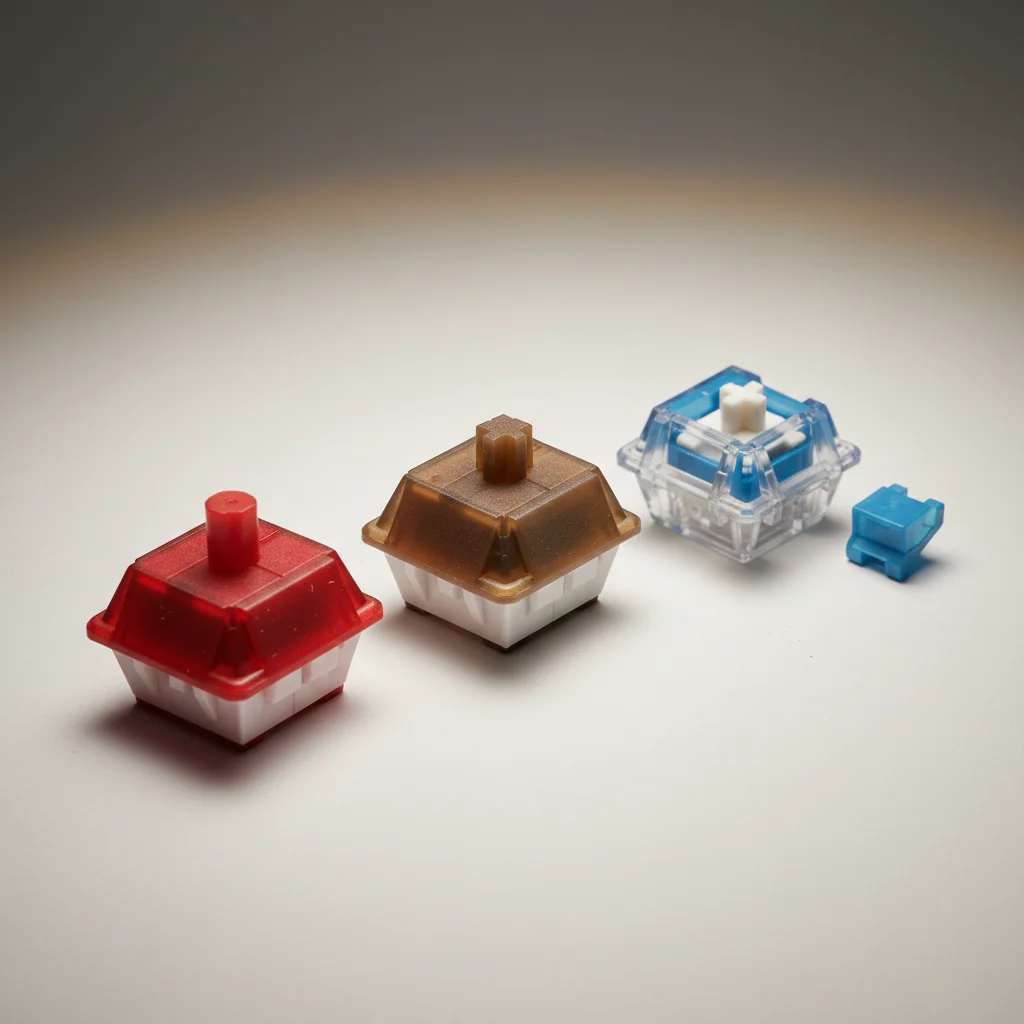
Image credit: Gemini
Quick Comparison
Table To give you a broad overview before we dive into the technical details, here’s a snapshot of how these three switch types stack up against each other. This table highlights the fundamental differences in feedback, noise levels, and ideal use cases. Feature | Linear Switches | Tactile Switches | Clicky Switches
Feedback Type | Smooth, no bump | Physical bump | Physical bump + Audible click Sound Profile | Quiet / Silent | Moderate / Thocky | Loud / High-pitched Actuation Force | Low to High (35g-60g+) | Medium (45g-65g) | Medium to High (50g-60g+) Travel Path | Straight down | Resistant then release | Resistant then snap Best For | Competitive Gaming (FPS) | Hybrid (Typing & Gaming) | Heavy Typing / Solo Use Common Color | Red, Black, Silver | Brown, Clear, Holy Panda | Blue, Green, White Smoothness | High | Medium | Low (due to mechanism)
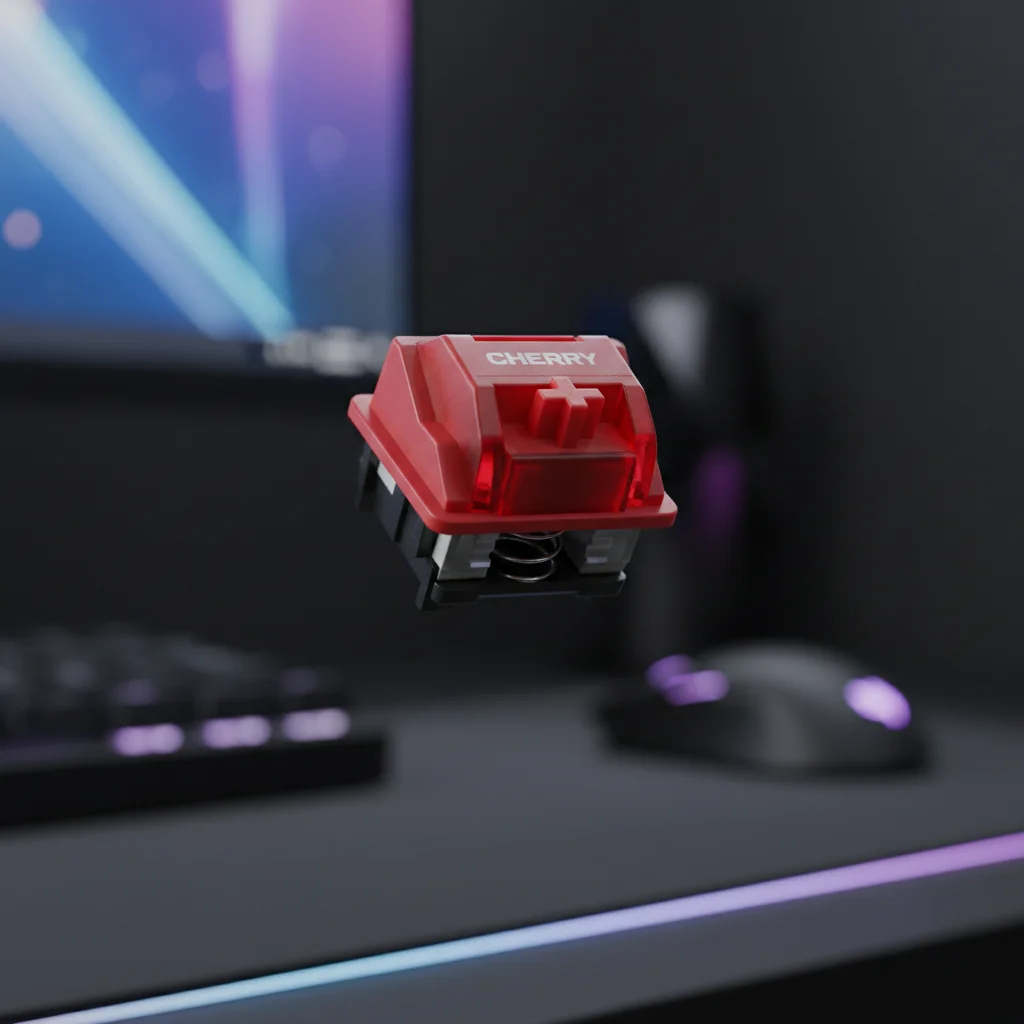
Image credit: Gemini
Switch Overview: Linear Switches
Linear switches are often considered the gold standard for competitive gaming. As the name suggests, the keystroke is a straight line from top to bottom. There’s no physical bump, no resistance point, and no audible click mechanism interrupting the travel of the stem. When you press a linear switch, usually color-coded as Red, Black, or Silver, the resistance is consistent until the key bottoms out. This lack of friction allows for rapid actuation and helps double-tapping, which is why esports professionals often rely on them. In the debate of linear vs tactile vs clicky switches, linears are the champions of speed and silence. They’re inherently the quietest of the three, although the sound of the keycap hitting the backplate can still be audible. Manufacturers in 2025 have pushed this technology further with pre-lubed stems and lighter springs to create an almost frictionless experience, reducing finger fatigue during long gaming marathons.
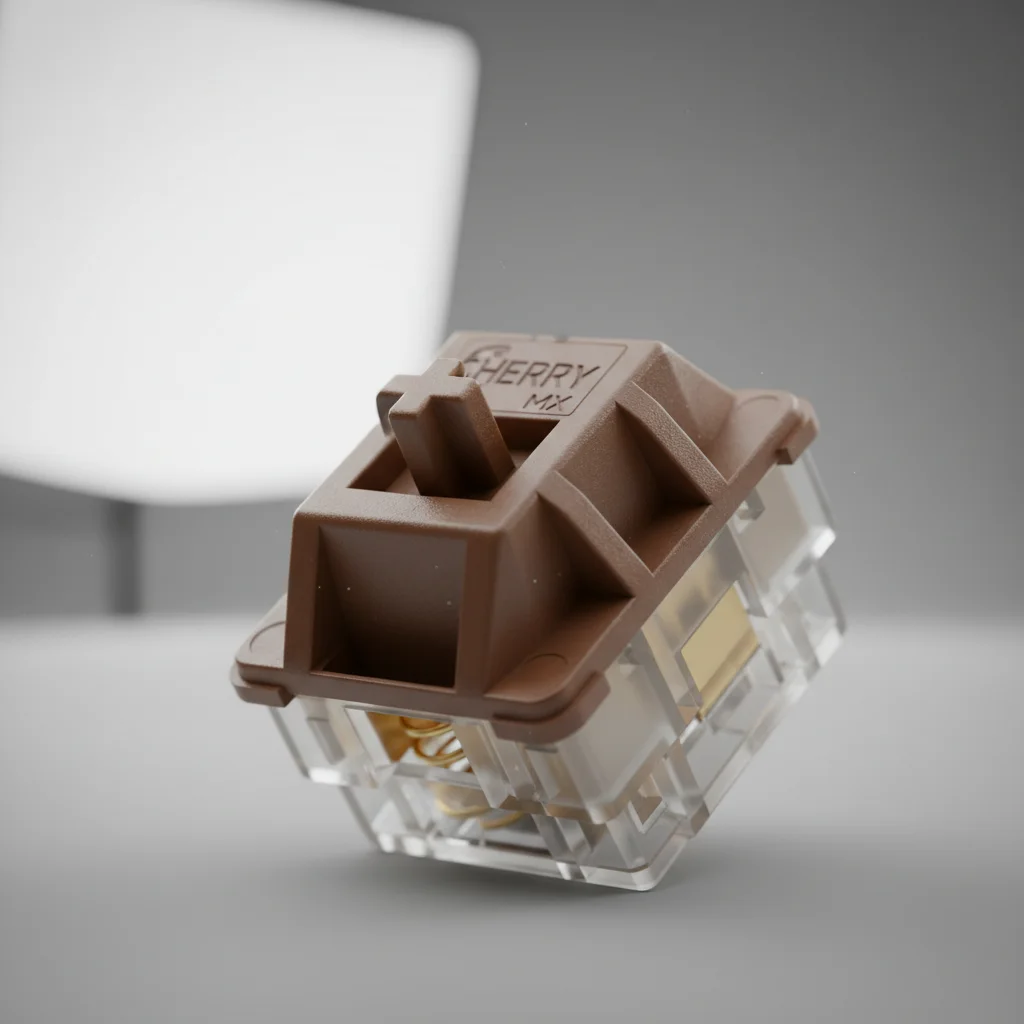
Image credit: Gemini
Switch Overview: Tactile Switches
Tactile switches offer a middle ground, providing a compromise that appeals to a vast number of users who want the best of both worlds. Typically associated with Brown or Clear stems, tactile switches feature a noticeable bump in the middle of the keystroke. This bump provides physical feedback to your finger, letting you know that the keypress has been registered without needing to bottom out the key completely. This is what’s the best mechanical switch characteristic for those who type heavily but also game frequently. The bump is not as loud or sharp as a clicky switch, but it offers more confirmation than a linear one. In a linear vs tactile vs clicky switches showdown, tactile switches are often seen as the hybrid king. They allow for accurate typing by reducing accidental presses, yet they’re smooth enough to handle gaming scenarios where reaction time is important, though perhaps slightly slower than the fastest linear speed switches.
Switch Overview: Clicky Switches
Clicky switches are the most distinct and polarizing option on the market. Identifiable by their Blue or Green stems, these switches use a mechanism—often a click jacket or a click bar—to produce a loud, sharp sound alongside a substantial physical tactile bump. When you press a clicky switch, you feel a resistance that snaps midway through, accompanied by that classic typewriter-style sound. For many typists and programmers, this auditory and physical confirmation is incredibly satisfying and rhythmic. However, in the context of linear vs tactile vs clicky switches for gaming, clicky switches often lag behind. The mechanism that creates the click can introduce a slight hysteresis, where the reset point is higher than the actuation point, making rapid-fire key presses difficult. Also, the noise level is significant; using clicky switches in a shared office or while streaming with an open microphone is often discouraged due to the high decibel output.
Feature-by-Feature Comparison
Now that we’ve established the basics, it’s time to break down the linear vs tactile vs clicky switches comparison into specific categories that matter most to users. We’ll analyze performance, feel, acoustics, and durability.
Performance and
Speed When analyzing performance, specifically for gaming, linear switches generally hold the advantage. The absence of a tactile bump means there’s less friction and resistance, allowing the switch to travel faster. Speed switches (like Cherry MX Silver) are a sub-category of linears with shorter actuation points, making them even faster. In high-stakes FPS games like Valorant or CS:GO, milliseconds matter, and the consistency of a linear press helps with muscle memory for strafing and movement. Tactile switches are a close second; while the bump adds a fraction of resistance, many MMO and MOBA players prefer it because it prevents accidental key presses on long cooldown abilities. Clicky switches perform the worst in this metric due to the release mechanism, which can delay the switch from resetting quickly enough for rapid re-pressing.
Typing Feel and Ergonomics
If your primary focus is typing comfort, the ranking often flips. Linear switches can sometimes feel vague to heavy typists because there’s no signal that the letter has been typed until the key hits the bottom (bottoming out). This can lead to pressing harder than necessary, causing finger fatigue. Tactile switches excel here by informing your finger exactly when the actuation happens, allowing for a lighter touch. Clicky switches offer the most distinct feedback, which many typists find reduces errors significantly. In a linear vs tactile vs clicky switches analysis for ergonomics, tactile switches are often recommended for mixed usage to balance fatigue management with feedback.
Acoustics and Sound
Profile Sound is a subjective preference but a critical objective factor in shared environments. Linear switches are the quietest, especially if they’re ‘silent’ variants with dampening pads. They produce a soft thud. Tactile switches produce a moderate sound profile—you can hear the mechanics, but it’s not piercing. Clicky switches are designed to be loud. The high-pitched click is intentional. If you’re a streamer, linear switches are almost mandatory to prevent your microphone from picking up constant clatter. If you work in a private office and love the retro vibe, the clicky sound might be a pro rather than a con. When looking at a comparison of mechanical switches regarding sound, the environment you live and work in should dictate your choice.
Customization and
Modding In the hobbyist community, linear and tactile switches are the most popular candidates for modding (lubing and filming). Applying lubricant to a linear switch can make it feel buttery smooth, enhancing the premium feel. Tactile switches also benefit from careful lubing to smooth out the scratchiness without ruining the bump. Clicky switches, however, are rarely lubed because the lubricant can interfere with the click mechanism (the click jacket), causing it to lose its signature sound and feel mushy. Therefore, if you plan to customize your keyboard, linear vs tactile vs clicky switches becomes a question of how much effort you want to put in; linears offer the highest potential for improvement through modding.
Pros & Cons: Linear Switches Pros:
Extremely smooth and consistent keystrokes. Quietest operation, ideal for streaming and office use. Fastest actuation for competitive gaming. High potential for custom lubing and tuning. Cons: Lack of feedback can lead to more typos for beginners. Bottoming out constantly can cause finger fatigue. Can feel ‘mushy’ if the quality is low or un-lubed.
Pros & Cons: Tactile Switches Pros:
Satisfying physical bump confirms actuation. Balanced performance for both typing and gaming. Reduces accidental key presses compared to linears. Good sound profile that isn’t obnoxious. Cons: The bump can interfere with rapid-fire inputs slightly. Some budget tactile switches feel scratchy or sandy. Not as silent as linear switches.
Pros & Cons: Clicky Switches Pros:
Unmistakable auditory and tactile feedback. Greatest typing satisfaction for many users. Helps prevent bottoming out by signaling actuation early. Cons: Very loud; unsuitable for shared spaces or open mics. Hysteresis makes them poor for rapid gaming. Harder to modify or lube effectively.
Which Switch
Should You Choose? Deciding between linear vs tactile vs clicky switches ultimately depends on your primary activity. If you’re a competitive gamer, specifically in the First Person Shooter (FPS) genre, you should almost certainly choose Linear switches. The speed and consistency are unmatched. If you’re a writer, programmer, or student who types thousands of words a day and works in a private room, Clicky switches might bring you the most joy and accuracy. For the vast majority of users who do a bit of everything—gaming in the evenings and working during the day—Tactile switches are the safest and most versatile recommendation. They answer the question of what’s the best mechanical switch for general use by providing necessary feedback without the noise penalty.
Final Verdict
In the great debate of linear vs tactile vs clicky switches, there’s no single winner that takes the crown for every human on earth. However, market trends in 2025 show a strong shift toward Linear switches for gamers and custom keyboard enthusiasts due to their smoothness and acoustics, while Tactile switches remain the reliable workhorse for productivity. Clicky switches have become a niche for retro enthusiasts. If you want to maximize your gaming potential, go Linear. If you want a daily driver that feels great to type on, go Tactile. Understanding this comparison of mechanical switches ensures that your next keyboard buy will be an upgrade that you can feel with every keystroke.
Frequently Asked
Questions What’s the best mechanical switch for Fortnite and fast-paced games?
Linear switches (like Red or Silver) are generally considered the best for fast-paced games because they have no bump to slow down the key press, allowing for faster building and editing. Is it worth switching from Clicky to Linear? If you’re starting to stream or want to improve your reaction times in games, it’s absolutely worth switching. It may take a week to get used to the lack of a click, but the performance benefits are real. Can I use tactile switches for gaming? Yes, absolutely. Many professional gamers use tactile switches (like Browns). They’re a great middle ground, though slightly less optimal for rapid-fire tapping than linears. Which switch is the quietest? Linear switches, specifically ‘Silent Linear’ variants, are the quietest. They often have silicone dampeners inside the stem to muffle the sound of the key hitting the bottom and top housing.