Introduction
The mid-range CPU market has historically been the battleground where the price-to-performance ratio is defined. In this comprehensive i5-14600K review, we examine whether Intel’s 14th Generation ‘Raptor Lake Refresh’ offering maintains the crown held by its predecessor. The Core i5-14600K arrives at a key moment, facing stiff competition from AMD’s X3D chips and even internal competition from discounted 13th Gen models. This review will dissect the architectural refinements, thermal challenges, and real-world benchmarks to determine if this processor is the smart choice for building a high-end gaming rig in 2025. We target mainstream gamers and content creators looking for a chip that balances high frame rates with respectable multitasking capabilities without the premium price tag of an i9.
Key Takeaways 1. **Incremental
Upgrade:** The 14600K offers a modest clock speed bump over the 13600K but retains the same core configuration, making it a refinement rather than a revolution.
- Gaming Prowess: It delivers excellent frame rates, often matching flagship CPUs in GPU-bound scenarios, solidifying its position as a top-tier gaming CPU.
- Thermal Demands: Despite being an i5, it runs hot and draws significant power, necessitating a solid cooling solution.
- Platform Maturity: Using the LGA1700 socket allows for use with existing Z690 and Z790 motherboards, offering broad compatibility but signaling the end of the upgrade path for this platform.
- Application Optimization: Support for Intel’s APO technology can boost performance in specific supported titles, adding a unique value proposition.
Product Overview
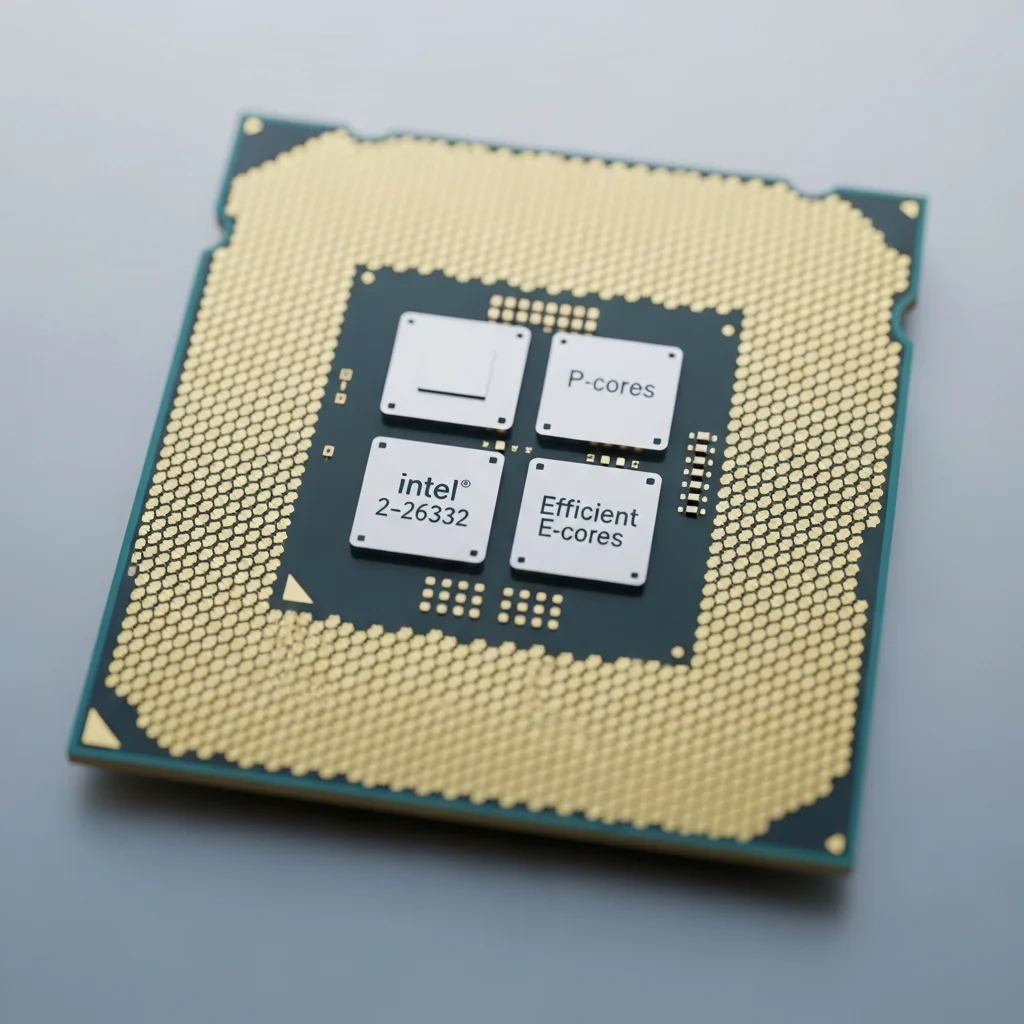
The Intel Core i5-14600K belongs to the desktop enthusiast category, specifically the 14th Generation Core lineup known as Raptor Lake Refresh. It’s designed for the ‘performance gamer’—someone who wants high-end gaming results but doesn’t necessarily need the extreme core counts required for heavy professional workstation tasks. What makes this product unique is its hybrid architecture, combining Performance-cores (P-cores) for active tasks and Efficient-cores (E-cores) for background processes. While structurally very similar to the 13600K, the 14600K distinguishes itself with higher out-of-the-box frequencies and improved memory controller stability for high-speed DDR5 kits. It targets users building a versatile PC capable of gaming at high refresh rates while handling streaming or background recording effortlessly.
Design & Build Quality
In the context of a CPU, design refers to the physical package and thermal interface. The i5-14600K continues to use the rectangular LGA1700 socket form factor. The Integrated Heat Spreader (IHS) is nickel-plated copper, designed to transfer heat efficiently to your cooler’s cold plate. Durability is standard for modern electronics; however, the LGA1700 socket mechanism places significant pressure on the center of the CPU, which can lead to slight warping over time. This has led many enthusiasts to use aftermarket contact frames to ensure flatter contact and better temperatures. While the build quality of the chip itself is solid, the user experience depends heavily on the motherboard’s retention mechanism. The aesthetic is purely functional, hidden beneath a cooler, but the continued support for both DDR4 and DDR5 memory on the motherboard side remains a strong design choice for flexibility.
Features & Technology
The Intel Core i5-14600K specifications reveal the heart of its performance. It features a total of 14 cores (6 P-cores and 8 E-cores) and 20 threads. The P-cores use the Raptor Cove architecture, while the E-cores are based on Gracemont. A key feature is the Intel Thread Director, a hardware-based scheduler that works with Windows to assign tasks to the correct cores dynamically. New to the 14th Gen is Intel Application Optimization (APO), a software feature that optimizes thread scheduling for specific games, potentially yielding significant FPS gains. Connectivity is top-tier, with native support for PCIe 5.0 lanes for graphics and PCIe 4.0 for storage. The chip also supports Wi-Fi 7 and Bluetooth 5.4 when paired with compatible 700-series motherboards, ensuring the platform feels modern despite the socket reaching its end of life.
Performance
When analyzing Core i5-14600K gaming performance, the results are impressive across the board. In CPU-intensive titles like Cyberpunk 2077 and Starfield, the increased clock speeds (boosting up to 5.3 GHz) allow for smooth gameplay with high 1% low FPS metrics. Compared to the competition, it holds its ground firmly. In direct comparison, the Intel Core i5-14600K vs 13600K battle shows a performance uplift of approximately 3-5% in gaming, which is measurable but not always noticeable to the naked eye. However, in productivity tasks like video editing in Premiere Pro, the 14600K’s higher frequencies allow for faster render times. The chip is stable, but thermal throttling can occur if not cooled properly, as it pushes voltage aggressively to maintain those high boost clocks. For gamers, this CPU rarely bottlenecks modern GPUs, making it a reliable engine for 1440p and 4K gaming.
Comfort & Usability
Usability for a processor primarily revolves around the installation and setup experience. The i5-14600K fits into any LGA1700 motherboard, meaning upgrading from a 12th Gen chip is as simple as a BIOS update and a swap. However, ‘comfort’ is compromised by the cooling requirements. Unlike older i5s that could run on budget air coolers, the 14600K demands a high-end dual-tower air cooler or a 240mm+ AIO liquid cooler to prevent thermal throttling under load. This adds complexity and cost to the build process. Once installed, the system feels snappy and responsive thanks to the high single-core speeds. The memory controller is more solid than previous generations, making XMP profile activation for fast DDR5 (e.g., 7200MHz+) much closer to ‘plug-and-play’ than before.
Software & Customization
Intel provides a solid software suite for enthusiasts who want to tweak their i5-14600K review unit. Intel Extreme Tuning Utility (XTU) is the primary tool, offering an accessible interface for overclocking P-cores and E-cores independently, undervolting to reduce temperatures, and monitoring real-time metrics. The new AI Assist feature in XTU (exclusive to 14th Gen i9s initially but trickling down) attempts to automate overclocking, though manual tuning still yields better results. Also, the Intel Application Optimization (APO) app must be installed and enabled to take advantage of game-specific scheduling boosts. While powerful, the fragmentation of needing BIOS settings, XTU, and APO can be overwhelming for casual users who just want the chip to work at its best out of the box.
Technical Specifications
Below is a breakdown of the Intel Core i5-14600K specifications:
-
Socket: LGA1700
-
Cores/Threads: 14 Cores (6P + 8E) / 20 Threads
-
Base Clock: P-Core 3.5 GHz / E-Core 2.6 GHz
-
Boost Clock: P-Core 5.3 GHz / E-Core 4.0 GHz
-
L3 Cache: 24 MB Smart Cache
-
L2 Cache: 20 MB
-
TDP (Base/Turbo): 125W / 181W
-
Memory Support: DDR4-3200 / DDR5-5600 (Official)
-
PCIe Lanes: Gen 5.0 (GPU) + Gen 4.0 (Storage)
-
Integrated Graphics: Intel UHD Graphics 770
-
Price Range: $299 - $329 USD
Pros & Cons
A quick look at the strengths and weaknesses identified in our i5-14600K review.
Pros
-
Exceptional Gaming Performance: Competes with flagship CPUs for a fraction of the price.
-
Strong Multitasking: The 8 E-cores handle background tasks and streaming effortlessly.
-
Broad Compatibility: Works with existing Z690 and Z790 motherboards with DDR4 or DDR5 support.
-
Overclocking Potential: Unlocked multiplier allows enthusiasts to push frequencies further.
Cons
-
High Power Consumption: Less efficient than competing AMD Ryzen parts.
-
Dead-End Platform: The LGA1700 socket won’t support future 15th Gen processors.
-
Demanding Cooling: Requires a substantial investment in cooling hardware to run quietly.
-
Minimal Gen-on-Gen Gain: Very similar performance to the cheaper 13600K.
Price & Value for Money
The i5-14600K sits in a competitive pricing tier, usually retailing around $300. When evaluating value, the context of the market is crucial. While the performance per dollar is excellent in isolation, the existence of the nearly identical i5-13600K—often available for $30-$50 less—complicates the recommendation. If you’re building a new system from scratch, the 14600K offers good value as a ‘do-it-all’ chip that outperforms AMD’s Ryzen 5 and 7 non-X3D parts in productivity. However, for pure gamers, the cost of the CPU plus a necessary high-end cooler and potentially a Z-series motherboard weakens the value proposition compared to efficient AMD platforms that can run on stock coolers.
Best Alternatives **1. [Intel
Core i5-13600](https://www.amazon.com/s?k=Intel+Core+i5-13600&tag=ggl05b-20)K:**
The most direct competitor. It offers virtually the same Core i5-14600K gaming performance (within margin of error) but usually costs significantly less. If you find a deal on this chip, it’s arguably the better value buy. 2. AMD Ryzen 7 7800X3D: For users focused strictly on gaming, the 7800X3D is superior. It offers faster gaming framerates and runs much cooler/efficiently, though it lags behind the 14600K in productivity workloads like video rendering. 3. AMD Ryzen 5 7600X: A budget-friendly alternative that gets you onto the AM5 platform with an upgrade path. It’s slower in multicore tasks but offers great gaming performance for a much lower price.
Who Should Buy It?
We recommend the i5-14600K for Hybrid Users who game at night and edit video or stream during the day; the E-cores shine here. It’s also excellent for Overclocking Enthusiasts who enjoy tweaking voltages and clock speeds to squeeze out maximum performance. Users upgrading from 12th Gen (e.g., i5-12400 or i5-12600K) will see a significant uplift without needing to change their motherboard. However, Budget Gamers should look at cheaper alternatives, and Power Efficiency Seekers should opt for AMD Ryzen options to avoid high electricity draw and heat output.
Final Verdict
To conclude our i5-14600K review, Intel has delivered a highly competent, albeit iterative, processor. It successfully defends the mid-range territory by offering flagship-level gaming performance and solid multitasking capabilities. While the Intel Core i5-14600K vs 13600K comparison shows only minor gains, the 14600K remains one of the most powerful all-around chips you can buy in 2025. Its biggest downsides are thermal inefficiency and the end of the LGA1700 socket lifecycle. If you need a powerful, versatile CPU and already have a decent cooler, the Core i5-14600K is a fantastic choice that will remain relevant for years to come. It’s, , a gaming powerhouse disguised as a mid-range chip.
FAQ 1. Is the i5-14600K good for streaming?
Yes, the 8 Efficiency cores handle the encoding overhead (or background apps) exceptionally well, ensuring your gaming framerates remain high while streaming. 2. Does the i5-14600K need liquid cooling? It’s highly recommended. While a massive air cooler (like a Noctua NH-D15) works, a 240mm or 360mm AIO liquid cooler is ideal to keep noise levels down and prevent throttling. 3. Is the i5-14600K better than the Ryzen 7 7800X3D? For productivity, yes, the 14600K is faster. For pure gaming, the Ryzen 7 7800X3D is generally faster and more efficient, though the 14600K is still a top-tier performer. 4. Can I use DDR4 memory with the 14600K? Yes, providing you buy a motherboard that supports DDR4. This is a great way to save money if you’re upgrading from an older system and want to keep your RAM.