This helps support our work and allows us to continue delivering in-depth, unbiased gaming coverage.
Introduction
The era of the silent or strictly scripted non-player character is rapidly coming to a close. In a major shift for the industry, 2025 has become the year where generative artificial intelligence transitions from a buzzword to a core mechanic in video game development. Recent announcements from major technology providers like NVIDIA, Inworld AI, and Ubisoft have solidified the reality of the AI NPC gaming future. This news is not just about smarter enemies; it represents a fundamental overhaul of how players interact with digital worlds. Instead of selecting from a pre-written list of dialogue options, gamers will soon engage in unscripted, natural conversations with characters that possess distinct personalities, memories, and emotional intelligence. For gamers and tech enthusiasts alike, understanding this pivot is crucial, as it promises to deepen immersion and replayability in ways previously thought impossible. The integration of Large Language Models (LLMs) into game engines is changing game design at a structural level, marking the most significant leap in narrative delivery since the introduction of voice acting.
Key Highlights of the
Industry Shift The transition toward AI-driven characters is defined by several key technological breakthroughs that have recently been unveiled. First is the implementation of Generative Dialogue, allowing NPCs to generate responses in real-time based on the player’s voice or text input, rather than relying on a fixed script. Second is the introduction of Long-Term Memory systems, where characters remember past interactions, player choices, and world events, altering their behavior dynamically over the course of a game. Third is the advancements in Emotional Modeling, enabling NPCs to exhibit realistic facial animations and vocal tones that match the context of the conversation. Finally, the shift includes Cloud and On-Device Hybrid Processing, a new approach by hardware manufacturers to allow these complex AI computations to run locally on consumer hardware without significant latency.
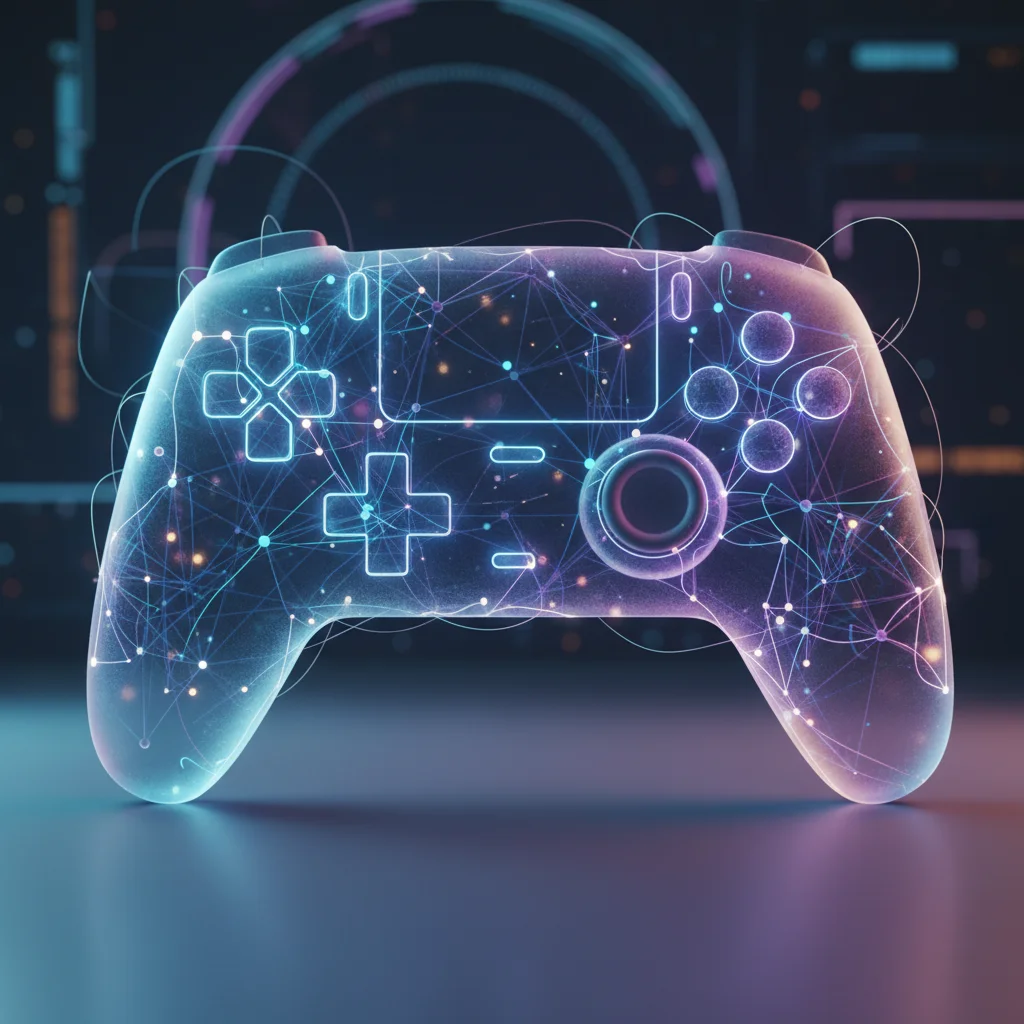
Detailed Breakdown of AI NPC Technology
To understand the magnitude of this news, we must look at the specific technologies driving the AI NPC gaming future. The traditional decision tree, a staple of RPGs for decades, is being replaced by dynamic neural networks. This allows for a level of fluidity that manual scripting can’t achieve.
Generative Dialogue and
Natural Language Processing The core of this evolution is the ability for NPCs to understand and reply to natural language. In recent showcases, developers have demonstrated engines where players can speak into their microphone, and the NPC interprets the intent, tone, and context before formulating a unique reply. This eliminates the immersion-breaking silence of reading text boxes and allows for roleplaying scenarios that developers could never anticipate. This technology relies on localized small language models (SLMs) to ensure that the dialogue remains relevant to the game’s lore and doesn’t veer into inappropriate or hallucinated topics.
Dynamic Animation and Audio
Syncing How AI is changing NPCs extends beyond just text. Tools like NVIDIA ACE (Avatar Cloud Engine) are now capable of Audio2Face technology, which automatically animates a 3D character’s facial muscles to match the generative audio track. This means that even if a line of dialogue has never been recorded by a voice actor, the character’s lips, eyes, and expressions will sync perfectly with the spoken words. This solves a massive production bottleneck, allowing studios to create infinite lines of dialogue without the prohibitive cost of motion capture for every single sentence.
Game Logic and
Agency Perhaps the most exciting development is the integration of AI into game logic. Future of game design with AI involves characters that have agency. Instead of waiting for a player to trigger a script, an AI NPC might decide to go to a shop, sleep, or hunt based on its own internal needs and the state of the game world. If a player attacks a village, the NPCs won’t just run a flee animation; they might organize a militia, remember the player’s face, or refuse to trade with the player in a completely different town hours later, all without a developer explicitly coding that specific chain of events.

Release Timeline and
Availability While tech demos have been circulating for months, the actual implementation into consumer products is scheduled to ramp up significantly throughout 2025. Several AA and AAA titles currently in development have announced the integration of AI-powered social interactions. We expect to see the first wave of fully AI-integrated RPGs hitting the market in late 2025 and early 2026. Hardware support is already rolling out, with new graphics cards and processors from AMD, Intel, and NVIDIA featuring dedicated AI cores (NPUs) designed specifically to handle the computational load of these characters. This technology will initially be available on high-end PC setups, with console optimization expected to follow as the software becomes more efficient.
Industry Perspectives and
Brand Statements Major industry players have been vocal about this transition. Jensen Huang, CEO of NVIDIA, has described this shift as the ‘iPhone moment’ for artificial intelligence in gaming, emphasizing that digital characters will become the primary interface for computer interaction. Ubisoft has also weighed in through their La Forge research and development division, stating that their goal with ‘NEO NPCs’ is not to replace writers but to empower them to create deeper backstories that players can explore organically. Microsoft and Xbox have partnered with Inworld AI to build a toolset that helps developers craft narrative content, reinforcing the idea that the future of game design with AI is about augmentation, not automation.
Expert Analysis: Is
This the Future or a Gimmick? The consensus among tech analysts is that the AI NPC gaming future is a permanent evolution, not a temporary trend. The limitations of scripted dialogue have long been a friction point in open-world games. However, experts caution that the initial rollout may be rocky. The challenge lies in ‘guardrails’—ensuring NPCs don’t break character or say offensive things. Success will depend on how well developers can constrain the AI to stay within the narrative boundaries of the game universe. Compared to traditional models, the maintenance cost for these systems is higher, requiring solid hardware, but the payoff in player retention and viral marketing potential through streaming is immense. This is a meaningful update to the medium of interactive storytelling.
Comparison: Scripted vs. AI-Powered NPCs
To visualize the difference, consider a standard RPG shopkeeper. In the current model, they have three lines of dialogue and a fixed inventory. If you save the town, they might say one new line. In the AI-powered model, that same shopkeeper would react to your armor being damaged, comment on the weather changing, remember that you haggled with them yesterday, and perhaps offer a discount because they heard rumors of your heroism from another NPC. The scripted model is static and safe; the AI model is dynamic and risky but offers a level of immersion that mimics human interaction. How AI is changing NPCs is essentially moving from a monologue delivered to the player to a dialogue shared with the player.
Expected Impact on the Gaming
Community The implications for the community are vast. For competitive gamers and esports, AI NPCs can serve as advanced training partners that learn and adapt to player strategies in real-time, offering a challenge that static difficulty levels can’t. For streamers, this technology provides infinite content, as no two interactions with a character will be the same, making ‘Let’s Plays’ highly unique. However, there’s a concern among casual players regarding hardware requirements. As AI NPCs in games require significant processing power, the baseline specs for PC building may rise, pushing budget gamers to rely on cloud streaming solutions to experience these features.
FAQs 1. When will I be able to play games with
AI NPCs? Some indie titles and mods already use this technology, but major AAA releases featuring fully integrated AI characters are expected to launch in late 2025. 2. Do I need a new graphics card for AI NPCs? While some processing happens in the cloud, on-device AI requires modern GPUs with tensor cores or NPUs. Upgrading will likely be necessary for the best performance. 3. Will AI NPCs replace human voice actors? Not entirely. Major plot points and cinematic performances will likely remain scripted and acted by humans to ensure quality, while AI will handle ambient and dynamic dialogue. 4. Can AI NPCs go off-script and ruin the story? Developers are using ‘guardrail’ systems to keep AI characters within the bounds of the game’s lore and plot, preventing them from breaking the narrative flow.
Final Thoughts
The announcement of widespread integration of generative models into game engines marks a turning point for the medium. The AI NPC gaming future promises a world where every interaction matters and where the game world feels truly alive, independent of the player’s presence. While there are hurdles regarding hardware optimization and narrative control, the potential for innovation is boundless. This is more than just a new feature; it’s a rewriting of the rules of engagement in virtual spaces. Gamers should keep a close watch on upcoming titles in late 2025, as we’re about to witness the first generation of games where the characters look back at us with genuine recognition.