When you purchase through links on our site, we may earn an affiliate commission.
What We Like
-
DDR6 offers a doubling of bandwidth over DDR5, starting at 8800MT/s and scaling upwards for massive throughput.
-
DDR5 remains highly cost-effective for mid-range builds with mature XMP and EXPO profiles for easy overclocking.
-
Early DDR6 modules integrate improved on-die ECC (Error Correction Code) for better data integrity at ultra-high frequencies. #
What Could Be
Better - DDR6 requires new motherboards with updated memory slots, making it incompatible with existing DDR5 platforms.
- Latency penalties are common in early-generation DDR6, occasionally resulting in negligible gains for current gaming titles.
- The initial premium for high-speed DDR6 kits exceeds DDR5 pricing by approximately 40% per gigabyte in early 2026.
Quick Answer: The Memory Shift in 2026
Understanding the
Evolution: DDR5 vs DDR6 The jump from DDR5 to DDR6 is defined primarily by frequency scaling and bandwidth efficiency. Where DDR5 introduced effective speeds starting at 4800MT/s and standard enthusiast kits hovering around 6400MT/s to 8000MT/s, DDR6 initiates its rollout at 8800MT/s with potential scaling beyond 12000MT/s as the standard matures. This bandwidth increase is crucial for the modern gaming PC, which must feed high-core-count processors that are increasingly sensitive to memory throughput. Unlike the move from DDR4 to DDR5, the architecture of DDR6 is designed to handle more complex multitasking while reducing the power draw per gigabit of throughput.
Performance
Analysis: Why Bandwidth Matters For gamers, memory bandwidth influences how quickly assets are loaded into the GPU and how efficiently the CPU handles game physics and artificial intelligence logic. In titles like Starfield or complex strategy games such as Civilization VII, the extra bandwidth provided by DDR6 enables more stable 1% low frame rates, reducing micro-stuttering that occurs during intense combat or scene transitions. While a standard DDR5-6000 CL30 kit is excellent for 1080p and 1440p gaming, the benefits of the DDR6 transition are most apparent at 4K resolutions where the system is pushing maximum textures and complex geometry that demand the absolute fastest data transfer between system components.
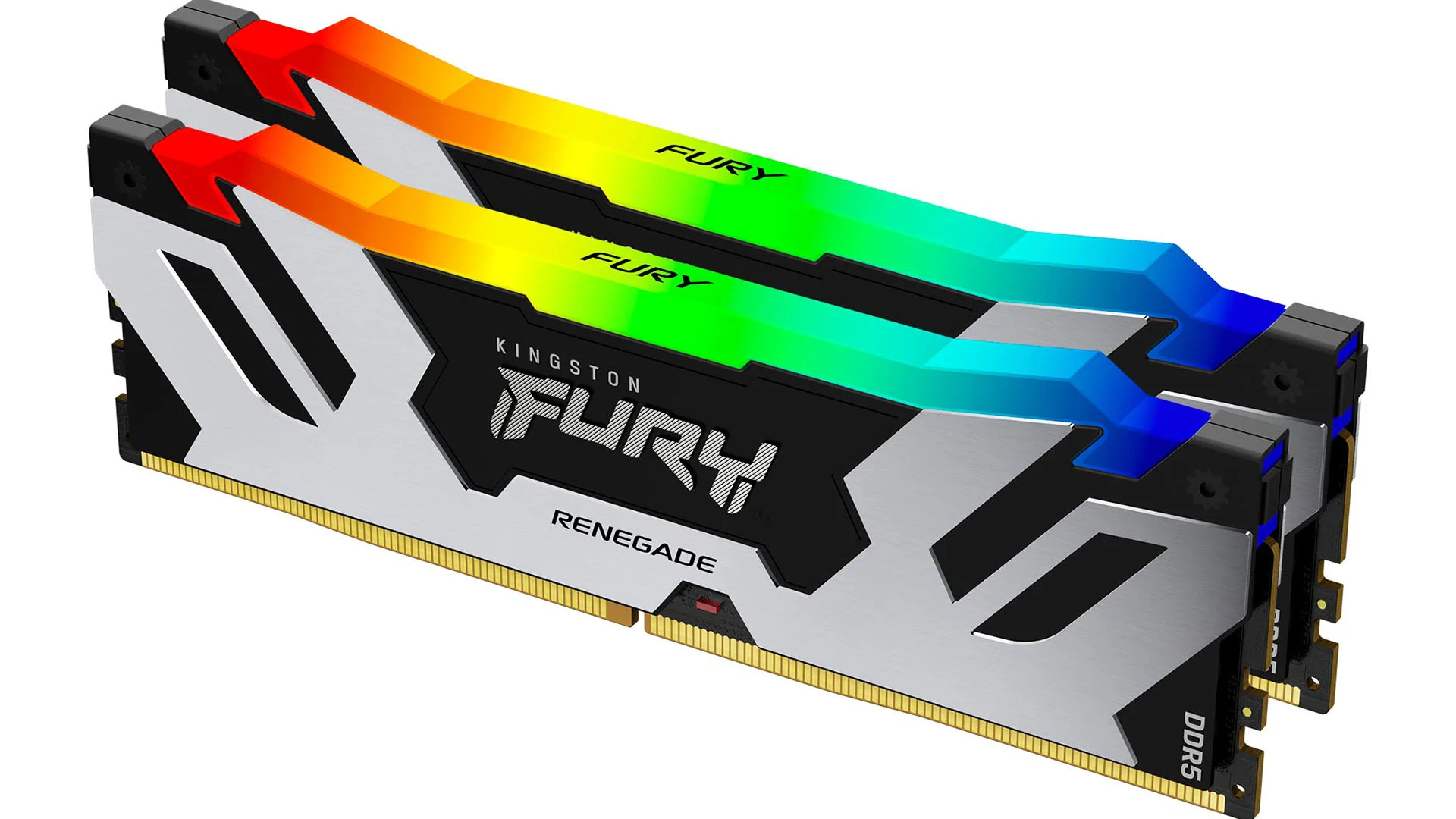
Image: Kingston
Platform Compatibility and
Future-Proofing The critical technical hurdle for DDR6 is its platform requirement; users can’t simply swap sticks as they did in previous generations. Transitioning to DDR6 in 2026 requires a motherboard equipped with the latest socket standards and memory trace layouts capable of supporting the high signal integrity required for 8800MT/s and beyond. For users building a PC today, choosing DDR5 keeps the entry cost lower, allowing funds to be reallocated toward better graphics cards or storage. However, if you’re looking to build a platform that will support the next two generations of CPU upgrades, opting for a DDR6-ready motherboard is a strategic investment in the future longevity of your gaming machine.
Value Assessment for the 2026
Gamer Evaluating the value of RAM in 2026 requires looking at the total cost of ownership for the memory subsystem. A high-end 32GB kit of DDR5-7200 currently costs roughly $150, whereas an entry-tier 32GB DDR6-8800 kit commands prices closer to $250. This $100 price difference is better spent on a faster GPU or an NVMe drive for most gamers, as the actual frame rate increase in games like Cyberpunk 2077 or Valorant is often limited to less than 3% in most scenarios. Only those involved in high-fidelity rendering, professional streaming, or extreme overclocking benchmarks will realize a meaningful return on the increased cost associated with the early adoption of the DDR6 standard this year.
Frequently Asked Questions
Is DDR5 vs DDR6 RAM for gaming 2026 worth the upgrade?
For most current gamers, the performance delta between high-end DDR5-7200 and early DDR6-8800 is minimal in real-world gaming scenarios. Upgrading is only recommended if you're building a new high-end system requiring future-proof architecture.
Will DDR6 RAM work on my existing DDR5 motherboard?
No, DDR6 is physically and electrically incompatible with DDR5 slots. You'll need a new motherboard and CPU platform that specifically supports the new DDR6 memory standard.
What's the primary benefit of DDR6 for gaming?
The primary benefit of DDR6 is increased memory bandwidth, which assists in data-heavy tasks, simulation games, and future-proofing for next-generation hardware pipelines.
Does DDR6 have higher latency than DDR5?
Yes, initial DDR6 modules feature higher CAS latencies compared to optimized DDR5 kits. However, the significantly higher clock frequencies generally offset these latencies in bandwidth-sensitive applications.
Where to Buy
Related Articles
-
Elgato Stream Deck Plus Review (2026): Is This the Best Gaming & Content Creation Peripheral?
-
HyperGamer Pro VM Appliance Review (2026): Is This the Best Gaming Home Server?