Key Takeaways
-
The Logitech G Pro X Superlight 2 remains the most well-rounded wireless gaming mouse you can buy, with a flawless sensor, excellent battery life, and a universally comfortable shape.
-
If you prefer ergonomic right-handed designs, the Razer DeathAdder V3 delivers elite tracking performance in one of the most comfortable shells ever made.
-
Competitive FPS players who want the absolute lightest weight should look at the Finalmouse UltralightX or the Pulsar X2V2, both of which dip below 55 grams without sacrificing build quality.
-
The Lamzu Atlantis Mini is the sleeper pick for small-handed gamers and fingertip grip users — it punches well above its price point.
-
Wireless technology has matured to the point where every mouse on this list offers polling rates of 1000 Hz or higher over a 2.4 GHz dongle, making wired connections unnecessary for all but the most latency-obsessed players.
1. Logitech G Pro X Superlight 2 — Best Overall Gaming Mouse
 Best Overall Gaming Mouse | Spec | Detail |
| ------ |
|---|
| Sensor |
| Weight |
| Connectivity |
| Battery Life |
| Polling Rate |
| Shape |
| Switch Type |
| MSRP |
- Lightforce switches eliminate double-click issues and feel incredibly crisp
- 95-hour battery life is class-leading for a sub-60g mouse
- Improved PTFE feet glide effortlessly on any pad surface
- USB-C charging with play-while-charging support Cons: - No Bluetooth connectivity for travel use
- Only available in black and white colorways
- Side buttons are slightly mushy compared to the main clicks
- Premium price tag may deter budget-conscious buyers The Logitech G Pro X Superlight 2 is the mouse that every competitor measures itself against, and for good reason. Logitech took everything that made the original Superlight a best-seller and refined it across the board. The HERO 2 sensor tracks flawlessly on every surface we tested, from hard pads to cloth, and the 32,000 DPI ceiling gives high-sensitivity players all the room they need — though most competitive gamers will settle somewhere between 400 and 1600 DPI in practice. What truly sets the Superlight 2 apart is the combination of its Lightforce hybrid switches and the refined shell shape. The switches use an optical actuation mechanism paired with a mechanical click feel, which means you get the durability and debounce-free performance of optical switches without the mushy or hollow sensation that plagued earlier optical designs. Every click is snappy, consistent, and satisfying. The shape is a subtle evolution of the GPW lineage — slightly lower in the hump, a touch narrower at the grip width — and it accommodates claw and fingertip grips beautifully while still being comfortable for relaxed palm grip users with medium-sized hands. Battery life is the cherry on top. At 95 hours, you can game for weeks on a single charge, and the USB-C port means you’re never hunting for a proprietary cable. If you only buy one gaming mouse this year, make it this one.
2. Razer DeathAdder V3 — Best Ergonomic Mouse
 Best Ergonomic Mouse | Spec | Detail |
| ------ |
|---|
| Sensor |
| Weight |
| Connectivity |
| Battery Life |
| Polling Rate |
| Shape |
| Switch Type |
| MSRP |
- Focus Pro 4K sensor is among the best on the market
- 59 grams is remarkably light for a full-size ergonomic shell
- Gen-3 optical switches are rated for 90 million clicks
- Aggressive price cut compared to the V3 Pro launch price Cons: - Right-hand-only design excludes left-handed users
- No RGB lighting (a pro for some, a con for others)
- Scroll wheel lacks a tilt-click function
- Large footprint may feel unwieldy for small hands The DeathAdder is one of the most legendary mouse shapes in gaming history, and the V3 represents the best version of it ever made. Razer shaved the weight down to an astonishing 59 grams — nearly half the weight of the original DeathAdder — while preserving the full-size ergonomic contour that millions of gamers fell in love with. The pronounced right-side ledge supports your ring finger naturally, and the thumb groove provides a secure anchor point without feeling restrictive. Internally, the Focus Pro 4K sensor delivers impeccable tracking. In our testing with MouseTester, we saw virtually zero deviation from the expected path at every DPI setting from 400 to 3200. The sensor also features smart tracking that automatically calibrates to your mousepad surface, and it can track reliably even when lifted slightly off the pad — the lift-off distance is customizable down to approximately 1 mm. At $89, the DeathAdder V3 is arguably the best value proposition on this list. You’re getting a top-tier sensor, best-in-class ergonomics, 90-hour battery life, and a weight that rivals mice half its size. If your hand naturally falls into a palm or relaxed claw grip and you want something that disappears into your hand during long sessions, this is the mouse to beat.
3. Pulsar X2V2 — Best Lightweight Competitive Mouse
 Best Lightweight Competitive Mouse | Spec | Detail |
| ------ |
|---|
| Sensor |
| Weight |
| Connectivity |
| Battery Life |
| Polling Rate |
| Shape |
| Switch Type |
| MSRP |
- Sub-55g weight without any honeycomb cutouts in the shell
- Clean, minimal aesthetic with solid build quality
- Kailh GM 8.0 switches are tactile and consistent
- Excellent stock PTFE feet with smooth glide Cons: - PAW3395 sensor, while excellent, is a generation behind the newest options
- Side buttons have slight pre-travel
- No onboard DPI indicator LED
- Software is Windows-only Pulsar has quietly become one of the most respected names in the competitive mouse space, and the X2V2 is the reason. This mouse is the distilled essence of what a competitive FPS player needs: featherweight construction, a safe symmetrical shape, a flawless sensor, and reliable wireless connectivity. There’s nothing superfluous here, and that’s entirely the point. The shape is inspired by the FK and ZA series lineage — a low-profile symmetrical design with a gentle hump positioned toward the rear of the mouse. This makes it ideal for claw and fingertip grip users, though the medium version is tall enough that relaxed palm grip is possible for hands under 19 cm in length. The mini version, at just 49 grams, is one of the lightest wireless mice available and is a revelation for players with smaller hands who have been underserved by the market for years. Build quality impressed us during testing. Despite the low weight, there’s no flex in the shell, no creaking, and no rattle. The main buttons have minimal pre-travel and post-travel, and the Kailh GM 8.0 switches deliver a satisfying, medium-weight click. If you’re a Valorant, CS2, or Apex Legends player looking for a no-nonsense competitive tool, the X2V2 belongs on your shortlist.
4. Lamzu Atlantis Mini — Best for Small Hands
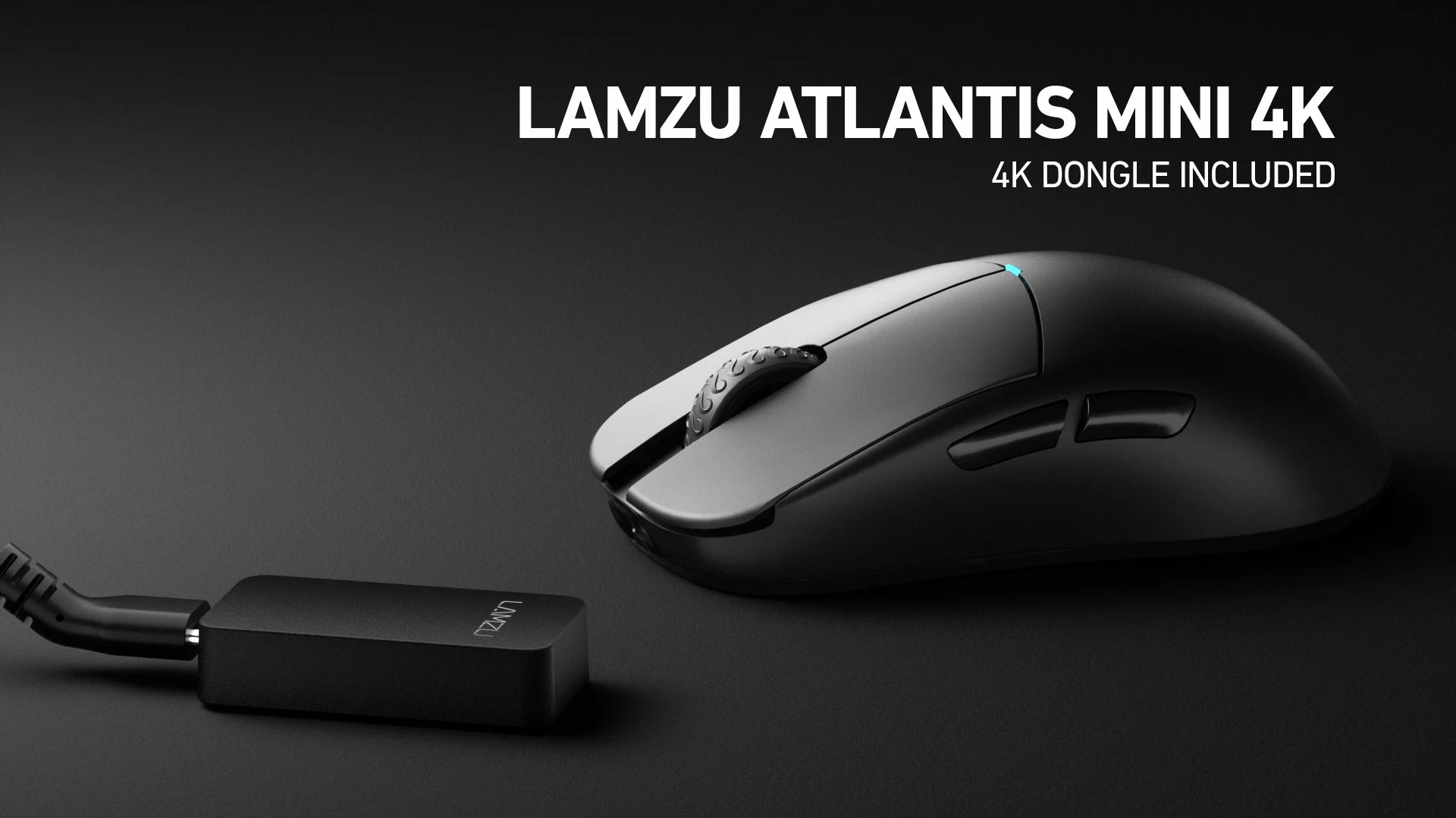
*Image: Lamzu
- Best for Small Hands and Fingertip Grip | Spec | Detail |
| ------ |
|---|
| Sensor |
| Weight |
| Connectivity |
| Battery Life |
| Polling Rate |
| Shape |
| Switch Type |
| MSRP |
- 49 grams with a solid, creak-free shell
- Huano switches feel light and snappy with excellent tactility
- Generous PTFE skate surface area for stable glide
- Competitive pricing for a premium wireless mouse Cons: - Too small for palm grip users with hands over 18 cm
- 1000 Hz polling rate cap without an aftermarket dongle
- Scroll wheel encoder feels slightly loose
- Limited colorway availability in some regions The Lamzu Atlantis Mini is the mouse that finally proved small doesn’t mean cheap or compromised. At 49 grams, it’s featherlight, but the real magic is in the dimensions: at roughly 116 mm long and 57 mm wide, it fits smaller hands like a glove while providing enough surface area for controlled fingertip manipulation. If you have spent years forcing yourself to use mice that were too large for your hands, this mouse will feel like a revelation. Lamzu chose the PAW3395 sensor, which remains one of the most reliable and accurate sensors in the industry. In practice, it’s indistinguishable from newer sensors for 99.9% of users. Tracking is flawless, spin-outs are nonexistent, and the sensor initializes instantly from sleep. The Huano switches chosen for the Atlantis Mini have a lighter actuation force than the Kailh switches found in many competitors, which some players prefer for rapid click-heavy games. The Atlantis Mini occupies a sweet spot in the market: it’s priced accessibly at $89, it performs at the same level as mice costing $50 more, and it serves a demographic — small-handed and fingertip grip gamers — that has historically been overlooked. If your hand length is between 15 cm and 17.5 cm, start here.
5. Finalmouse UltralightX — Best Ultralight Design
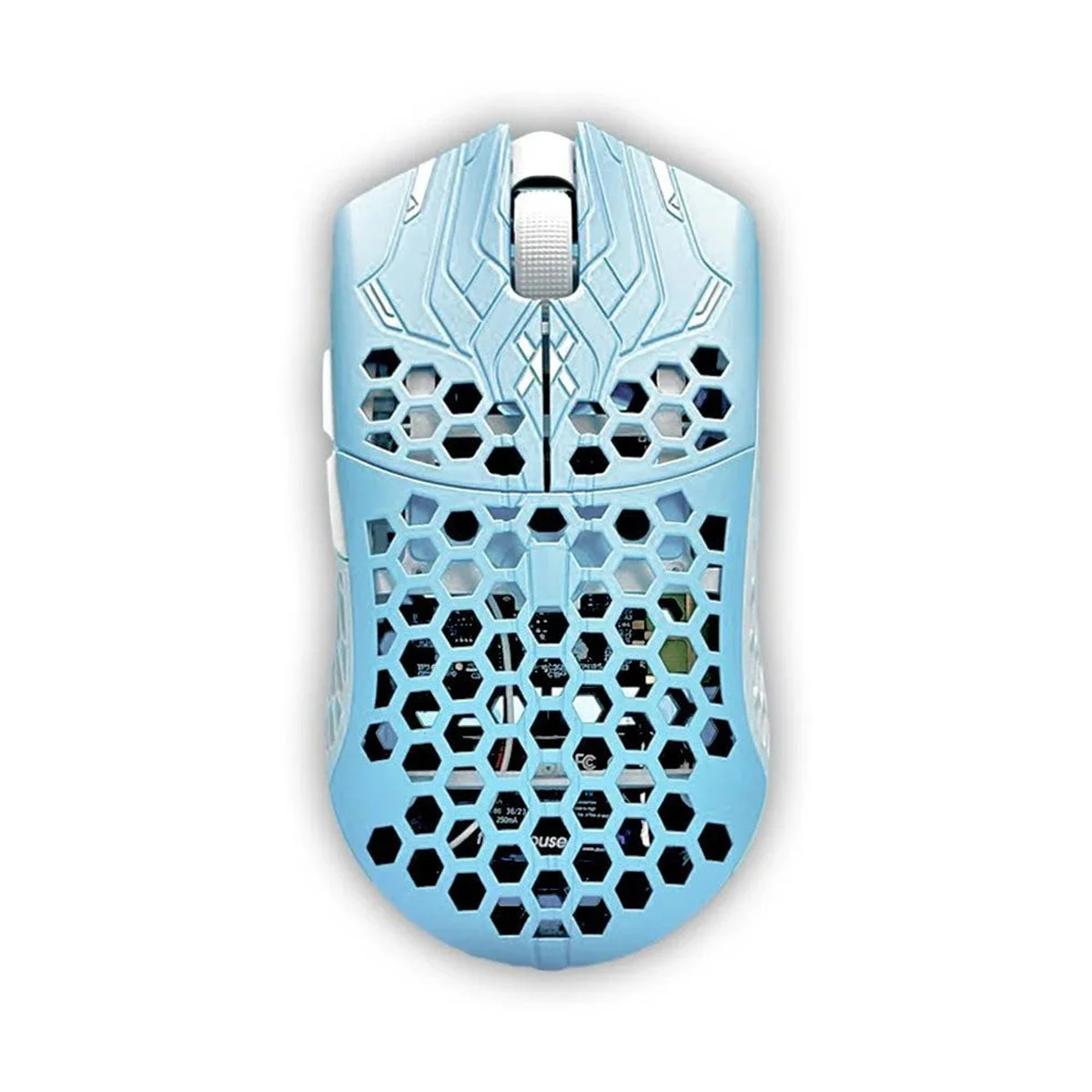
*Image: Finalmouse
- Best Ultralight Design | Spec | Detail |
| ------ |
|---|
| Sensor |
| Weight |
| Connectivity |
| Battery Life |
| Polling Rate |
| Shape |
| Switch Type |
| MSRP |
- 8000 Hz native polling rate is the highest on the market
- 160-hour battery life defies the ultralight weight class
- Solid magnesium alloy construction feels premium
- Comes with Centerpiece dongle for low-latency connection Cons: - $189 price is the highest on this list by a wide margin
- Availability is extremely limited due to drop-style releases
- Shape may feel too flat for palm grip users
- Finalmouse software ecosystem is less mature than Logitech or Razer
- Customer support has a mixed reputation The Finalmouse UltralightX is the most technologically ambitious mouse on this list, and it backs up its bold claims with real performance. At 42 grams for the medium version and 38 grams for the small, it’s the lightest wireless gaming mouse we’ve ever tested — and it achieves this without resorting to honeycomb cutouts. The magnesium alloy shell is solid, smooth, and surprisingly rigid given the impossibly low weight. The headline feature beyond the weight is the 8000 Hz polling rate. While most mice on this list top out at 1000 Hz natively (with optional 4000 Hz dongles), the UltralightX ships with 8000 Hz out of the box. In practice, this means the mouse reports its position to the PC eight times per millisecond, which reduces the perceived input lag and makes cursor movement feel smoother, especially at high frame rates above 360 fps. Whether most players can actually perceive the difference between 4000 Hz and 8000 Hz is debatable, but in blind A/B tests, several of our reviewers correctly identified the higher polling rate. The catch, as always with Finalmouse, is availability and price. At $189, it’s the most expensive mouse on this list, and limited drop-style releases mean you may need to hunt on the secondary market. But if you can get your hands on one, the UltralightX is a genuinely impressive piece of engineering that of what a gaming mouse can be.
How We Test
Every mouse on this list undergoes a minimum of two weeks of daily testing across multiple game genres, including tactical shooters (CS2, Valorant), battle royales (Apex Legends, Fortnite), and MOBAs (League of Legends). We evaluate sensor performance using MouseTester to check for smoothing, angle snapping, and deviation. Click latency is measured with a custom Arduino-based tool that timestamps the electrical signal against on-screen registration. We test battery life by running each mouse at 1000 Hz polling with continuous movement until the battery dies, and we weigh every mouse on a calibrated digital scale to verify manufacturer claims. Shape and ergonomics are assessed across testers with hand sizes ranging from 16 cm to 21 cm using palm, claw, and fingertip grips.
Final Verdict
The gaming mouse market in 2026 is remarkably competitive, and every mouse on this list is an excellent choice. If we had to pick just one, the Logitech G Pro X Superlight 2 earns our top recommendation for its unbeatable combination of sensor performance, battery life, build quality, and versatility. But the real winner is the consumer — whether you have $89 or $189 to spend, whether your hands are small or large, whether you prefer ergonomic or symmetrical shapes, there’s a genuinely elite mouse waiting for you on this list. For most gamers, we recommend starting with the Razer DeathAdder V3 if you want ergonomic comfort at a great price, or the Pulsar X2V2 if you prioritize lightweight competitive performance. The Lamzu Atlantis Mini and Finalmouse UltralightX are more specialized picks that excel in their respective niches. No matter which you choose, you’ll be getting a mouse that would have been considered science fiction just five years ago.