

When you purchase through links on our site, we may earn an affiliate commission.
What We Like
- DDR5 provides up to 2x the bandwidth of DDR4, reaching speeds over 8400 MHz.
- DDR5 uses 1.1V, improving power efficiency over the 1.2V standard of DDR4.
- DDR4 remains the most cost-effective solution for legacy system upgrades.
- DDR4 modules are widely available and currently lower in total system cost.
What Could Be Better
- DDR5 requires a compatible motherboard and CPU, preventing simple drop-in upgrades.
- DDR5 modules often have higher CAS latency, which can offset speed gains in some games.
- DDR4 is a dead-end platform with no path to future high-speed memory standards.
- DDR4 inventory is shrinking, which has recently caused prices to fluctuate upward.
Quick Verdict
DDR4 Memory Overview
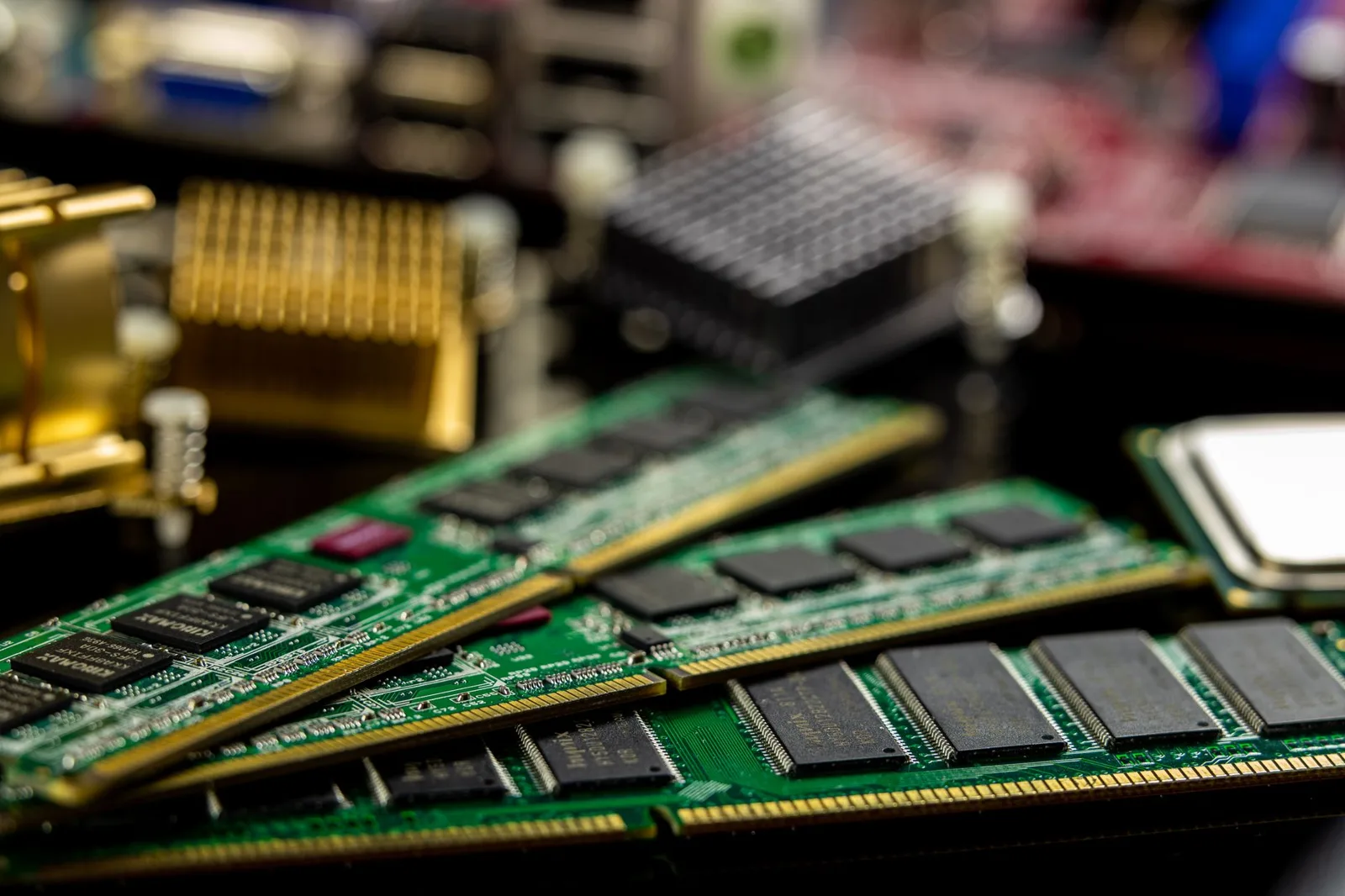
Operating typically between 2133 MHz and 3200 MHz, DDR4 relies on a 64-bit single-channel architecture. Published manufacturer specifications confirm its stability and low entry cost make it practical for maintaining older systems without swapping motherboards.
DDR5 Memory Overview
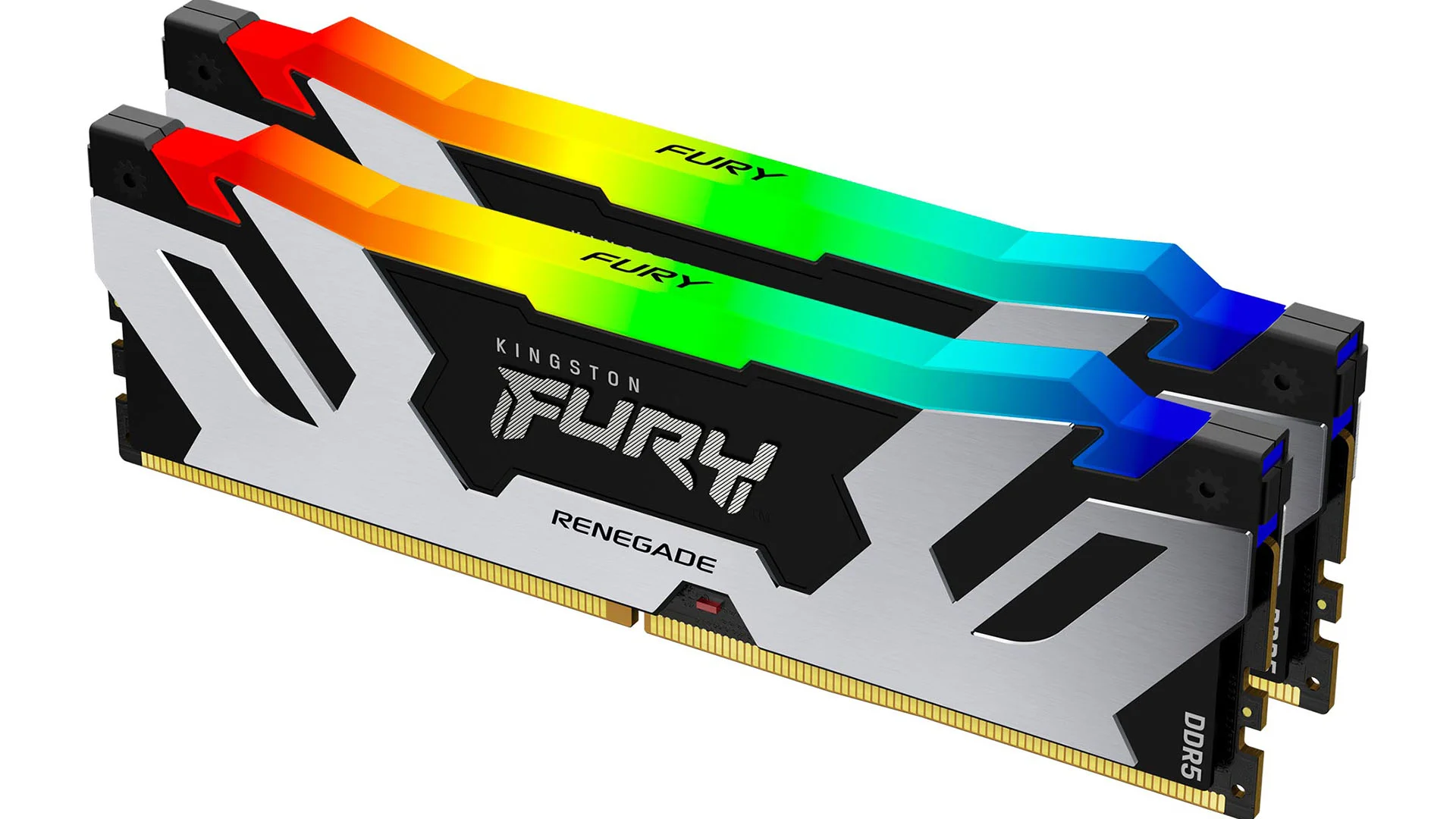
Starting at 4800 MHz and scaling past 8400 MHz, DDR5 modernizes memory architecture through dual 32-bit sub-channels and on-module power management. Technical documentation points to this design as the current standard for high-throughput workloads.
Performance and Bandwidth
JEDEC specifications show DDR5 delivers roughly 1.5x to 2x the throughput of DDR4. Independent benchmark reviews indicate this bandwidth advantage translates to measurable gains in heavy rendering software, while gaming framerates often remain bound by the graphics card rather than memory speed.
Latency and Efficiency
Higher nominal CAS latency figures on DDR5 modules are offset by much faster clock frequencies, yielding comparable real-world nanosecond response times. Power draw drops from 1.2V on DDR4 to 1.1V on DDR5, aided by the on-module PMIC.
Decision Flowchart
Use this table to determine your memory path. | Question | If Yes | If No | | :--- | :--- | :--- | | Building a new PC? | Choose DDR5 | Keep DDR4 | | Professional video editing? | Choose DDR5 | Keep DDR4 | | Tight budget? | Keep DDR4 | Choose DDR5 | | Upgrading an existing rig? | Keep DDR4 | Choose DDR5 |
Which One Should You Choose?
Professional creators leverage DDR5 for faster rendering times, whereas budget-focused gamers find DDR4 sufficient for 1440p setups. New platforms demand DDR5 for future compatibility, while legacy builds continue running fine on DDR4 capacities.
Final Verdict
Technical consensus favors DDR5 for raw throughput and efficiency on fresh builds. Existing hardware limitations and strict pricing keep DDR4 relevant for value-focused upgrades.
Comparison
| Feature | DDR4 RAM | DDR5 RAM |
|---|---|---|
| Typical Speed | 2133-3200 MHz | 4800-8400+ MHz |
| Max Bandwidth | ~25.6 GB/s | ~67.2 GB/s |
| Voltage | 1.2V | 1.1V |
| Max Capacity | 32GB per module | 128GB per module |
| Architecture | 64-bit single channel | Dual 32-bit sub-channels |
Frequently Asked Questions
Can I use DDR5 RAM in a DDR4 motherboard?
No. DDR4 and DDR5 are physically and electrically incompatible due to different pin layouts and voltage management systems.
Is DDR5 always faster for gaming?
Not necessarily. While DDR5 offers higher bandwidth, many games are GPU-bound, meaning the real-world performance difference is often negligible.
Does DDR5 reduce heat compared to DDR4?
Yes. According to JEDEC specifications, DDR5 operates at 1.1V compared to 1.2V for DDR4 and integrates the Power Management Integrated Circuit (PMIC) directly onto the module.
Where to Buy
- DDR4 and DDR5 Memory Modules on Amazon
- DDR4 RAM on Amazon
- DDR5 RAM on Amazon
- DDR4 vs DDR5 RAM on Amazon